Introduction: When I Need to Impress Without the Stress
There’s a particular kind of panic that sets in when you realize you have guests coming over in an hour and you haven’t even thought about what to serve. That happened to me about two years ago when my husband’s boss mentioned he’d love to see our new house – and invited himself over for dinner that same evening. I stood in my kitchen, mentally running through my options, when I remembered chicken piccata – that elegant Italian restaurant dish that looks and tastes like you spent hours in the kitchen but actually comes together in about 20 minutes.
That evening was a turning point for me. My husband’s boss raved about the meal, asking how long I’d been perfecting such a sophisticated recipe. When I casually mentioned it took less time than ordering takeout, he didn’t believe me. Since then, chicken piccata has been my secret weapon for impressing people without breaking a sweat. The buttery, lemony sauce with briny capers is restaurant-quality, the presentation is beautiful, and the flavors are complex enough that people assume you’re a culinary genius.
What Makes Chicken Piccata So Special
The Magic of the Piccata Sauce
The heart and soul of chicken piccata is undoubtedly the sauce. It’s a perfect example of how a few simple ingredients can create something extraordinary when combined correctly. The sauce is built on a foundation of butter, lemon juice, white wine, and chicken broth, with capers providing salty, briny pops of flavor throughout.
What I love most about this sauce is its balance. The acidity from the lemon juice cuts through the richness of the butter, while the wine adds depth and complexity. The capers bring a distinctive Mediterranean flavor that makes the dish feel special and sophisticated. When you spoon this glossy, golden sauce over tender chicken cutlets, it pools around the meat beautifully, begging to be soaked up with crusty bread or absorbed by pasta.
Why This Chicken Recipe Feels Fancy
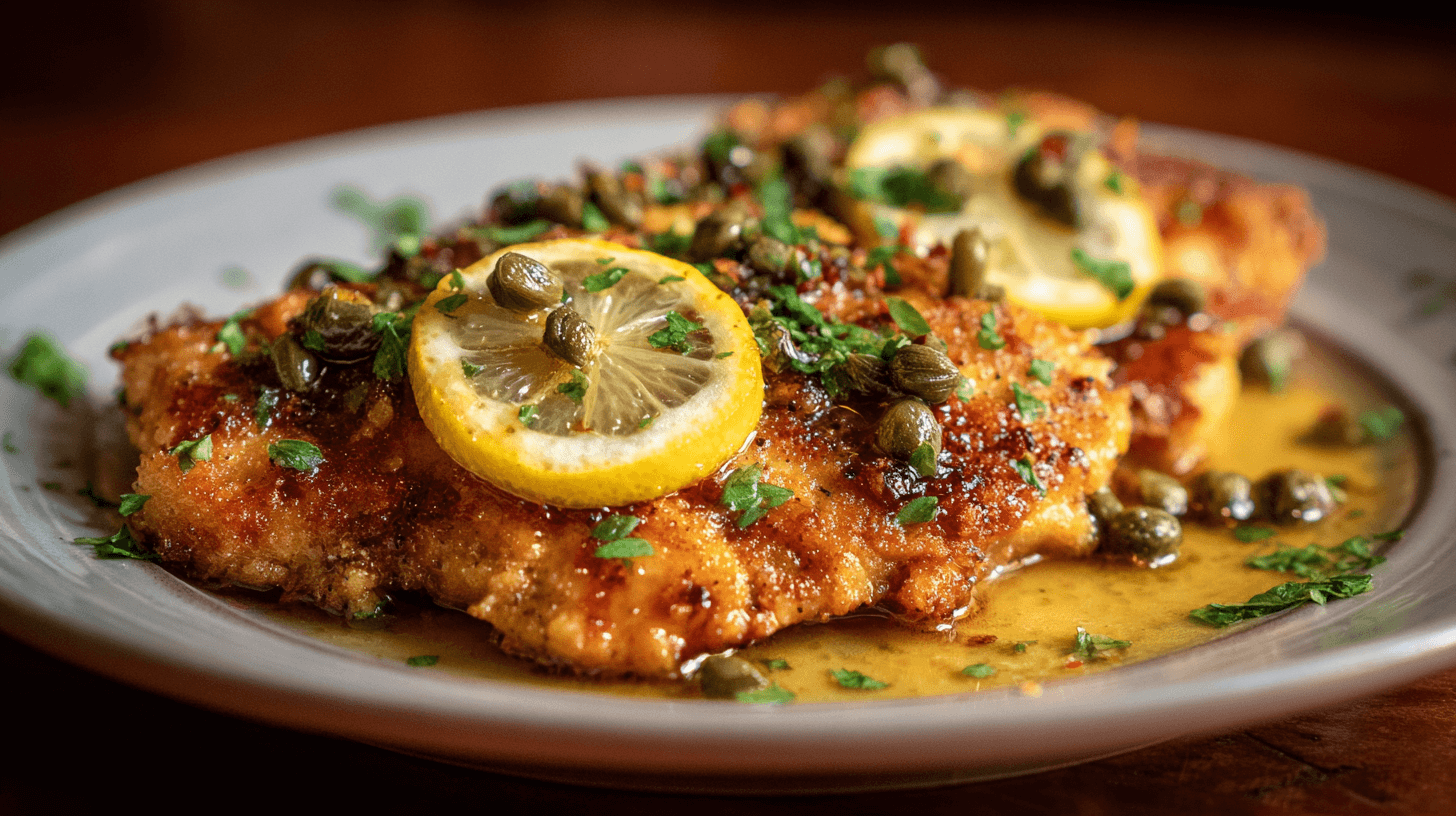
Despite its simplicity, chicken piccata has all the hallmarks of fine dining. First, there’s the technique of dredging the chicken in flour and pan-frying it to a golden crust – it’s classic French cooking technique that immediately elevates the dish. Then there’s the visual appeal: those bright yellow lemon slices arranged artfully over the chicken, the glossy butter sauce, and the scattered capers create a plate that looks like it came from an Italian trattoria.
The flavors are bright, sophisticated, and perfectly balanced – not heavy or overly rich like some chicken dishes. It’s the kind of meal that pairs beautifully with a crisp white wine and feels appropriate for any occasion from a weeknight dinner to a dinner party or romantic date night at home.
Essential Ingredients for Chicken Piccata
For the Chicken
- 2 large boneless, skinless chicken breasts (about 1.5 lbs total)
- 1/2 cup all-purpose flour
- 1 teaspoon salt
- 1/2 teaspoon black pepper
- 1/2 teaspoon garlic powder
- 2 tablespoons olive oil
- 2 tablespoons butter (divided)
For the Piccata Sauce
- 1/2 cup dry white wine (such as Pinot Grigio or Sauvignon Blanc)
- 3/4 cup low-sodium chicken broth
- 1/4 cup fresh lemon juice (about 2 lemons)
- 3 tablespoons capers, drained
- 3 tablespoons unsalted butter (cold, cut into pieces)
- 2 tablespoons fresh parsley, chopped
- 1 lemon, thinly sliced for garnish
The quality of your ingredients matters here. Use fresh lemon juice, not bottled – the difference is night and day. Get good quality capers; the smaller ones (labeled “nonpareil”) are more delicate and flavorful than large ones. And don’t skip the wine; it adds essential depth to the sauce that chicken broth alone can’t provide.
Step-by-Step Instructions for Perfect Chicken Piccata
Preparing the Chicken Cutlets
The first step to perfect chicken piccata is preparing your chicken properly. Take your chicken breasts and slice them horizontally to create thinner cutlets. You’re aiming for pieces about 1/2 inch thick. This thickness ensures they cook quickly and evenly, which is crucial when you’re trying to get dinner on the table in 20 minutes.
If your cutlets are still a bit thick or uneven, place them between two pieces of plastic wrap or parchment paper and gently pound them with a meat mallet or the bottom of a heavy pan. Don’t go crazy – you want them evenly thin, not obliterated. This pounding step also tenderizes the meat, ensuring every bite is soft and easy to cut.
Once your cutlets are the right thickness, pat them completely dry with paper towels. This is crucial for getting a good crust. Moisture is the enemy of browning, so make sure they’re as dry as possible.
Dredging and Pan-Frying the Chicken
In a shallow dish, whisk together the flour, salt, pepper, and garlic powder. This seasoned flour will create a light coating that browns beautifully and helps thicken the sauce later. Dredge each chicken cutlet in the flour mixture, shaking off any excess. You want a light, even coating, not a thick layer of flour.
Heat the olive oil and 1 tablespoon of butter in a large skillet over medium-high heat. When the butter foam subsides and the pan is nice and hot (but not smoking), add the chicken cutlets. Don’t crowd the pan – you may need to work in batches. I usually do two cutlets at a time in my 12-inch skillet.
Cook for 3-4 minutes on the first side without moving them. This allows a beautiful golden-brown crust to develop. Flip and cook for another 3-4 minutes on the second side until the chicken is cooked through (internal temperature of 165°F) and golden brown on both sides. Transfer the cooked chicken to a plate and tent loosely with foil to keep warm.
Creating the Signature Piccata Sauce
Here’s where the magic happens. Using the same pan (don’t clean it – all those browned bits are pure flavor!), add the white wine. Turn the heat to medium-high and use a wooden spoon to scrape up all the brown bits stuck to the bottom of the pan. This process, called deglazing, is essential for building a flavorful sauce.
Let the wine simmer for about 2 minutes until it reduces by about half. You should be able to smell the alcohol cooking off. Then add the chicken broth and lemon juice. Bring this mixture to a simmer and let it cook for another 3-4 minutes until it reduces slightly and the flavors meld together.
Add the capers to the sauce and stir. Now comes the final touch that transforms this from a simple pan sauce into something luxurious: add the cold butter pieces one at a time, swirling the pan after each addition to incorporate the butter into the sauce. The cold butter emulsifies with the liquid, creating a glossy, velvety sauce that coats the back of a spoon beautifully.
Finishing and Plating Your Chicken Piccata
Return the chicken cutlets to the pan, nestling them into the sauce. Lay the lemon slices over and around the chicken. Let everything simmer together for just 2-3 minutes, spooning the sauce over the chicken occasionally. This final simmer allows the chicken to reheat and absorb some of those beautiful lemony, buttery flavors.
Transfer the chicken to serving plates, spoon the sauce generously over each portion, making sure everyone gets plenty of capers and a lemon slice or two. Garnish with freshly chopped parsley for a pop of color and fresh flavor. The bright green parsley against the golden sauce and pale chicken is simply beautiful.
Nutritional Information for Chicken Piccata
Per serving (1 chicken cutlet with sauce):
- Calories: 385
- Protein: 38g
- Carbohydrates: 12g
- Fat: 19g
- Saturated Fat: 8g
- Fiber: 1g
- Sugar: 1g
- Sodium: 680mg
- Potassium: 520mg
- Vitamin C: 18% DV
- Calcium: 4% DV
- Iron: 10% DV
Chicken piccata is relatively light compared to cream-based chicken dishes. Most of the calories come from the protein-rich chicken and the butter in the sauce. It’s naturally low in carbohydrates and can easily fit into various dietary approaches. To lighten it further, you can reduce the butter by half, though the sauce won’t be quite as luxurious.
Perfect Side Dishes for Chicken Piccata
Pasta Pairings with Piccata
The classic pairing for chicken piccata is angel hair pasta or linguine. The thin pasta strands are perfect for soaking up that buttery lemon sauce. I cook my pasta while the chicken is resting, so everything is ready at the same time. Toss the cooked pasta with a little olive oil and butter, then create a nest of pasta on each plate and top with the chicken and sauce.
For a more substantial pasta dish, I sometimes toss the cooked pasta directly in the piccata sauce before plating. This ensures every strand is coated in that delicious lemony flavor. Just be aware that pasta will absorb sauce, so you might want to make a bit extra.
Vegetable Sides for Piccata
For a lighter accompaniment, I love serving chicken piccata with simple steamed or roasted vegetables. Asparagus is my absolute favorite – the bright green spears look beautiful next to the golden chicken, and their slight bitterness complements the lemony sauce perfectly. Roast them with just olive oil, salt, and pepper at 425°F for about 12 minutes.
Green beans almondine (green beans with toasted almonds and butter) is another classic pairing. The nutty flavor of the almonds echoes the richness of the butter sauce. Roasted or sautéed zucchini, broccoli, or Brussels sprouts also work wonderfully.
Starch Options Beyond Pasta
While pasta is traditional, chicken piccata pairs beautifully with other starches too. Creamy mashed potatoes or garlic mashed potatoes are wonderful for soaking up the sauce. Risotto – particularly a simple lemon risotto or parmesan risotto – creates an elegant, cohesive meal.
For a lighter option, try cauliflower rice or mashed cauliflower. They provide the same sauce-absorbing function as traditional starches but with fewer carbohydrates. I’ve also served this over polenta (creamy Italian-style cornmeal), which is absolutely delicious and very Italian-appropriate.
Wine Pairing Suggestions for Chicken Piccata
White Wine Pairings
Since white wine is already in the sauce, pairing chicken piccata with white wine is a natural choice. I follow the rule of “cook with what you’ll drink” – if a wine isn’t good enough to drink, it’s not good enough to cook with. A crisp Pinot Grigio from Italy is my top choice. It has the acidity to match the lemon in the dish and won’t overpower the delicate chicken.
Sauvignon Blanc is another excellent option, particularly those from New Zealand with bright citrus and herbaceous notes that complement the capers and lemon. A light, unoaked Chardonnay can also work well, providing enough body to match the butter sauce without overwhelming the dish.
Considering Rosé and Champagne
A dry rosé from Provence makes a lovely pairing with chicken piccata, especially in warmer months. The wine’s acidity and light fruit flavors complement the dish without competing with it. Plus, the beautiful pink color makes the meal feel even more special.
For truly special occasions, Champagne or sparkling wine is magnificent with chicken piccata. The bubbles cut through the butter sauce, and the acidity of the wine mirrors the lemon in the dish. A Brut Champagne or Prosecco from Italy (keeping it in the Italian family) creates a celebratory meal.
Common Mistakes to Avoid with Chicken Piccata
Overcooking the Chicken
Chicken breast, especially when pounded thin, cooks very quickly. The most common mistake I see is overcooking it until it’s dry and tough. Remember, your chicken will continue cooking a bit from carryover heat even after you remove it from the pan, and it will simmer in the sauce for a few minutes at the end.
Use an instant-read thermometer and pull your chicken when it hits 160°F – it will coast up to the safe 165°F as it rests. Overcooked chicken can’t be fixed, so it’s better to err on the side of slightly underdone (which will finish cooking in the sauce) than to overcook.
Using Too Much Flour
The flour coating should be light and delicate, not thick and heavy. When you dredge your chicken, shake off all excess flour. You should still be able to see the chicken through the coating. Too much flour makes the coating gummy and prevents proper browning. It also makes your sauce overly thick and gloppy instead of silky and glossy.
If you do accidentally add too much flour and your sauce becomes too thick, thin it with a little more chicken broth or lemon juice, adding just a tablespoon at a time until you reach the desired consistency.
Forgetting to Deglaze Properly
Those browned bits stuck to your pan after cooking the chicken (called fond) are pure concentrated flavor. If you don’t scrape them up and incorporate them into your sauce, you’re missing out on a huge depth of flavor. Use your wooden spoon to really scrape and loosen all those bits when you add the wine.
Make sure your wine is simmering actively enough to loosen the fond. If you add the wine to a pan that’s not hot enough, you won’t get the same deglazing effect.
Variations on Classic Chicken Piccata
Chicken Piccata with Mushrooms
One of my favorite variations adds thinly sliced mushrooms to the sauce. After removing the chicken from the pan, sauté about 8 oz of sliced cremini or button mushrooms in a tablespoon of butter until golden brown. Remove them, then proceed with the sauce as directed, adding the mushrooms back in along with the capers.
The earthy mushrooms add a wonderful depth and make the dish even more substantial. They also soak up the lemon-butter sauce beautifully.
Chicken Piccata with Artichokes
Adding marinated artichoke hearts (drained and quartered) creates a more Mediterranean-style piccata. I add them to the sauce along with the capers. The tangy artichokes complement the lemon perfectly and add interesting texture.
This variation is particularly good when served over pasta or with crusty bread for soaking up all the delicious sauce.
Veal or Pork Piccata
While this recipe uses chicken, the piccata preparation is traditional with veal (vitello piccata). Veal cutlets are prepared exactly the same way as the chicken. The flavor is more delicate and buttery, though veal is more expensive and harder to find.
Pork cutlets (thinly sliced pork tenderloin) also work beautifully with this preparation. The pork has a bit more flavor than chicken and stands up well to the bright, acidic sauce.
Making Chicken Piccata Ahead of Time
Meal Prep Strategies
While chicken piccata is best served fresh, you can prep several components ahead to make dinner time even quicker. Pound and portion your chicken cutlets, then store them in a zip-top bag in the refrigerator for up to 24 hours before cooking. You can even have your flour dredging mixture ready in a shallow dish, covered with plastic wrap.
Juice your lemons and measure out your other sauce ingredients ahead of time, storing them in small containers in the fridge. With this prep done, the actual cooking takes only about 15 minutes.
Storing and Reheating Leftovers
Leftover chicken piccata stores well in the refrigerator for up to 3 days. Store the chicken and sauce together in an airtight container. The sauce will solidify when cold because of the butter, but that’s perfectly normal.
To reheat, place the chicken and sauce in a skillet over medium-low heat with a splash of chicken broth or water to thin the sauce back to the proper consistency. Heat gently until warmed through, about 5-7 minutes. Don’t microwave if you can avoid it – the chicken can become rubbery.
FAQs About Chicken Piccata
Can I make chicken piccata without wine?
Yes, though the flavor will be slightly different. Replace the wine with an equal amount of chicken broth plus a tablespoon of white wine vinegar or additional lemon juice. The wine adds acidity and complexity, so you’ll want to compensate with something acidic.
Some people use dry vermouth as a wine substitute – it’s more shelf-stable than wine and works quite well in pan sauces like this one.
What if I don’t like capers?
Capers are traditional in chicken piccata and provide that distinctive briny, slightly floral flavor. However, if you really don’t like them, you can substitute chopped green olives, which provide a similar salty, briny quality. Alternatively, just omit them entirely and increase the lemon juice slightly to maintain the bright flavor profile.
Can I use chicken thighs instead of breasts?
Absolutely! Boneless, skinless chicken thighs work wonderfully in this recipe. They’re more forgiving than breasts because they have more fat, making them harder to overcook. Pound them to an even thickness just as you would with breasts. The cooking time will be about the same.
Is chicken piccata gluten-free?
The traditional recipe is not gluten-free because of the flour dredging. However, you can easily make it gluten-free by using a gluten-free flour blend or cornstarch for dredging. The sauce itself is naturally gluten-free as long as you use gluten-free chicken broth.
Why is my sauce not thickening?
The sauce for chicken piccata should be thin and silky, not thick like gravy. If it seems too thin, make sure you’ve reduced the wine and broth adequately before adding the final butter. The flour from dredging the chicken also contributes to slight thickening. If you want a thicker sauce, you can whisk a teaspoon of cornstarch with a tablespoon of cold water and stir it into the simmering sauce.
Can I freeze chicken piccata?
I don’t recommend freezing chicken piccata because the butter sauce doesn’t freeze and thaw well – it will separate and become grainy. If you must freeze it, freeze only the cooked, unsauced chicken cutlets. Thaw them in the refrigerator, then reheat gently and make fresh sauce.
My Secret Tips for Restaurant-Quality Piccata
After making this dish countless times, I’ve discovered a few tricks that take it from good to absolutely restaurant-worthy. First, I add a tiny pinch of sugar to the sauce right before adding the final butter. It’s barely detectable, but it rounds out the flavors and balances the acidity perfectly.
Second, I always finish with a final squeeze of fresh lemon juice right before serving. The cooked lemon juice in the sauce provides depth, but that splash of fresh juice at the end adds brightness and makes all the flavors pop.
Third, don’t skip the resting time after cooking the chicken. Those few minutes allow the juices to redistribute throughout the meat. If you cut into it immediately, all the juices run out and your chicken will be drier.
Finally, use a larger skillet than you think you need. Crowding the pan will cause the chicken to steam rather than brown properly, and you won’t get that beautiful golden crust. It’s better to work in batches using a properly heated pan than to try to fit everything at once.
One last secret: save the lemon halves after juicing them. Toss them into the sauce while it’s reducing. They’ll add even more lemon flavor and aromatic oils. Just remember to fish them out before serving!
Print
Chicken Piccata Recipe – The Fancy Chicken I Make in 20 Minutes
Description
Despite its simplicity, chicken piccata has all the hallmarks of fine dining. First, there’s the technique of dredging the chicken in flour and pan-frying it to a golden crust – it’s classic French cooking technique that immediately elevates the dish. Then there’s the visual appeal: those bright yellow lemon slices arranged artfully over the chicken, the glossy butter sauce, and the scattered capers create a plate that looks like it came from an Italian trattoria.
The flavors are bright, sophisticated, and perfectly balanced – not heavy or overly rich like some chicken dishes. It’s the kind of meal that pairs beautifully with a crisp white wine and feels appropriate for any occasion from a weeknight dinner to a dinner party or romantic date night at home.
Ingredients
Essential Ingredients for Chicken Piccata
For the Chicken
- 2 large boneless, skinless chicken breasts (about 1.5 lbs total)
- 1/2 cup all-purpose flour
- 1 teaspoon salt
- 1/2 teaspoon black pepper
- 1/2 teaspoon garlic powder
- 2 tablespoons olive oil
- 2 tablespoons butter (divided)
For the Piccata Sauce
- 1/2 cup dry white wine (such as Pinot Grigio or Sauvignon Blanc)
- 3/4 cup low-sodium chicken broth
- 1/4 cup fresh lemon juice (about 2 lemons)
- 3 tablespoons capers, drained
- 3 tablespoons unsalted butter (cold, cut into pieces)
- 2 tablespoons fresh parsley, chopped
- 1 lemon, thinly sliced for garnish
The quality of your ingredients matters here. Use fresh lemon juice, not bottled – the difference is night and day. Get good quality capers; the smaller ones (labeled “nonpareil”) are more delicate and flavorful than large ones. And don’t skip the wine; it adds essential depth to the sauce that chicken broth alone can’t provide.
Instructions
Step-by-Step Instructions for Perfect Chicken Piccata
Preparing the Chicken Cutlets
The first step to perfect chicken piccata is preparing your chicken properly. Take your chicken breasts and slice them horizontally to create thinner cutlets. You’re aiming for pieces about 1/2 inch thick. This thickness ensures they cook quickly and evenly, which is crucial when you’re trying to get dinner on the table in 20 minutes.
If your cutlets are still a bit thick or uneven, place them between two pieces of plastic wrap or parchment paper and gently pound them with a meat mallet or the bottom of a heavy pan. Don’t go crazy – you want them evenly thin, not obliterated. This pounding step also tenderizes the meat, ensuring every bite is soft and easy to cut.
Once your cutlets are the right thickness, pat them completely dry with paper towels. This is crucial for getting a good crust. Moisture is the enemy of browning, so make sure they’re as dry as possible.
Dredging and Pan-Frying the Chicken
In a shallow dish, whisk together the flour, salt, pepper, and garlic powder. This seasoned flour will create a light coating that browns beautifully and helps thicken the sauce later. Dredge each chicken cutlet in the flour mixture, shaking off any excess. You want a light, even coating, not a thick layer of flour.
Heat the olive oil and 1 tablespoon of butter in a large skillet over medium-high heat. When the butter foam subsides and the pan is nice and hot (but not smoking), add the chicken cutlets. Don’t crowd the pan – you may need to work in batches. I usually do two cutlets at a time in my 12-inch skillet.
Cook for 3-4 minutes on the first side without moving them. This allows a beautiful golden-brown crust to develop. Flip and cook for another 3-4 minutes on the second side until the chicken is cooked through (internal temperature of 165°F) and golden brown on both sides. Transfer the cooked chicken to a plate and tent loosely with foil to keep warm.
Creating the Signature Piccata Sauce
Here’s where the magic happens. Using the same pan (don’t clean it – all those browned bits are pure flavor!), add the white wine. Turn the heat to medium-high and use a wooden spoon to scrape up all the brown bits stuck to the bottom of the pan. This process, called deglazing, is essential for building a flavorful sauce.
Let the wine simmer for about 2 minutes until it reduces by about half. You should be able to smell the alcohol cooking off. Then add the chicken broth and lemon juice. Bring this mixture to a simmer and let it cook for another 3-4 minutes until it reduces slightly and the flavors meld together.
Add the capers to the sauce and stir. Now comes the final touch that transforms this from a simple pan sauce into something luxurious: add the cold butter pieces one at a time, swirling the pan after each addition to incorporate the butter into the sauce. The cold butter emulsifies with the liquid, creating a glossy, velvety sauce that coats the back of a spoon beautifully.
Finishing and Plating Your Chicken Piccata
Return the chicken cutlets to the pan, nestling them into the sauce. Lay the lemon slices over and around the chicken. Let everything simmer together for just 2-3 minutes, spooning the sauce over the chicken occasionally. This final simmer allows the chicken to reheat and absorb some of those beautiful lemony, buttery flavors.
Transfer the chicken to serving plates, spoon the sauce generously over each portion, making sure everyone gets plenty of capers and a lemon slice or two. Garnish with freshly chopped parsley for a pop of color and fresh flavor. The bright green parsley against the golden sauce and pale chicken is simply beautiful.
Nutritional Information for Chicken Piccata
Per serving (1 chicken cutlet with sauce):
Calories: 385
Protein: 38g
Carbohydrates: 12g
Fat: 19g
Saturated Fat: 8g
Fiber: 1g
Sugar: 1g
Sodium: 680mg
Potassium: 520mg
Vitamin C: 18% DV
Calcium: 4% DV
Iron: 10% DV
Chicken piccata is relatively light compared to cream-based chicken dishes. Most of the calories come from the protein-rich chicken and the butter in the sauce. It’s naturally low in carbohydrates and can easily fit into various dietary approaches. To lighten it further, you can reduce the butter by half, though the sauce won’t be quite as luxurious.
Perfect Side Dishes for Chicken Piccata
Pasta Pairings with Piccata
The classic pairing for chicken piccata is angel hair pasta or linguine. The thin pasta strands are perfect for soaking up that buttery lemon sauce. I cook my pasta while the chicken is resting, so everything is ready at the same time. Toss the cooked pasta with a little olive oil and butter, then create a nest of pasta on each plate and top with the chicken and sauce.
For a more substantial pasta dish, I sometimes toss the cooked pasta directly in the piccata sauce before plating. This ensures every strand is coated in that delicious lemony flavor. Just be aware that pasta will absorb sauce, so you might want to make a bit extra.
Vegetable Sides for Piccata
For a lighter accompaniment, I love serving chicken piccata with simple steamed or roasted vegetables. Asparagus is my absolute favorite – the bright green spears look beautiful next to the golden chicken, and their slight bitterness complements the lemony sauce perfectly. Roast them with just olive oil, salt, and pepper at 425°F for about 12 minutes.
Green beans almondine (green beans with toasted almonds and butter) is another classic pairing. The nutty flavor of the almonds echoes the richness of the butter sauce. Roasted or sautéed zucchini, broccoli, or Brussels sprouts also work wonderfully.
Starch Options Beyond Pasta
While pasta is traditional, chicken piccata pairs beautifully with other starches too. Creamy mashed potatoes or garlic mashed potatoes are wonderful for soaking up the sauce. Risotto – particularly a simple lemon risotto or parmesan risotto – creates an elegant, cohesive meal.
For a lighter option, try cauliflower rice or mashed cauliflower. They provide the same sauce-absorbing function as traditional starches but with fewer carbohydrates. I’ve also served this over polenta (creamy Italian-style cornmeal), which is absolutely delicious and very Italian-appropriate.
Wine Pairing Suggestions for Chicken Piccata
White Wine Pairings
Since white wine is already in the sauce, pairing chicken piccata with white wine is a natural choice. I follow the rule of “cook with what you’ll drink” – if a wine isn’t good enough to drink, it’s not good enough to cook with. A crisp Pinot Grigio from Italy is my top choice. It has the acidity to match the lemon in the dish and won’t overpower the delicate chicken.
Sauvignon Blanc is another excellent option, particularly those from New Zealand with bright citrus and herbaceous notes that complement the capers and lemon. A light, unoaked Chardonnay can also work well, providing enough body to match the butter sauce without overwhelming the dish.
Considering Rosé and Champagne
A dry rosé from Provence makes a lovely pairing with chicken piccata, especially in warmer months. The wine’s acidity and light fruit flavors complement the dish without competing with it. Plus, the beautiful pink color makes the meal feel even more special.
For truly special occasions, Champagne or sparkling wine is magnificent with chicken piccata. The bubbles cut through the butter sauce, and the acidity of the wine mirrors the lemon in the dish. A Brut Champagne or Prosecco from Italy (keeping it in the Italian family) creates a celebratory meal.
Common Mistakes to Avoid with Chicken Piccata
Overcooking the Chicken
Chicken breast, especially when pounded thin, cooks very quickly. The most common mistake I see is overcooking it until it’s dry and tough. Remember, your chicken will continue cooking a bit from carryover heat even after you remove it from the pan, and it will simmer in the sauce for a few minutes at the end.
Use an instant-read thermometer and pull your chicken when it hits 160°F – it will coast up to the safe 165°F as it rests. Overcooked chicken can’t be fixed, so it’s better to err on the side of slightly underdone (which will finish cooking in the sauce) than to overcook.
Using Too Much Flour
The flour coating should be light and delicate, not thick and heavy. When you dredge your chicken, shake off all excess flour. You should still be able to see the chicken through the coating. Too much flour makes the coating gummy and prevents proper browning. It also makes your sauce overly thick and gloppy instead of silky and glossy.
If you do accidentally add too much flour and your sauce becomes too thick, thin it with a little more chicken broth or lemon juice, adding just a tablespoon at a time until you reach the desired consistency.
Forgetting to Deglaze Properly
Those browned bits stuck to your pan after cooking the chicken (called fond) are pure concentrated flavor. If you don’t scrape them up and incorporate them into your sauce, you’re missing out on a huge depth of flavor. Use your wooden spoon to really scrape and loosen all those bits when you add the wine.
Make sure your wine is simmering actively enough to loosen the fond. If you add the wine to a pan that’s not hot enough, you won’t get the same deglazing effect.
Variations on Classic Chicken Piccata
Chicken Piccata with Mushrooms
One of my favorite variations adds thinly sliced mushrooms to the sauce. After removing the chicken from the pan, sauté about 8 oz of sliced cremini or button mushrooms in a tablespoon of butter until golden brown. Remove them, then proceed with the sauce as directed, adding the mushrooms back in along with the capers.
The earthy mushrooms add a wonderful depth and make the dish even more substantial. They also soak up the lemon-butter sauce beautifully.
Chicken Piccata with Artichokes
Adding marinated artichoke hearts (drained and quartered) creates a more Mediterranean-style piccata. I add them to the sauce along with the capers. The tangy artichokes complement the lemon perfectly and add interesting texture.
This variation is particularly good when served over pasta or with crusty bread for soaking up all the delicious sauce.
Veal or Pork Piccata
While this recipe uses chicken, the piccata preparation is traditional with veal (vitello piccata). Veal cutlets are prepared exactly the same way as the chicken. The flavor is more delicate and buttery, though veal is more expensive and harder to find.
Pork cutlets (thinly sliced pork tenderloin) also work beautifully with this preparation. The pork has a bit more flavor than chicken and stands up well to the bright, acidic sauce.