Lemon Impossible Pie — The Magic Custard Dessert Everyone Is Talking About
I’ll be honest: the first time someone described this recipe to me, I didn’t believe them. You pour one thin batter into a pie dish, slide it into the oven, and an hour later you pull out a pie with a real crust on the bottom, a creamy custard filling in the middle, and a golden, caramelized top? That sounds impossible — which is exactly how this lemon impossible pie got its name.
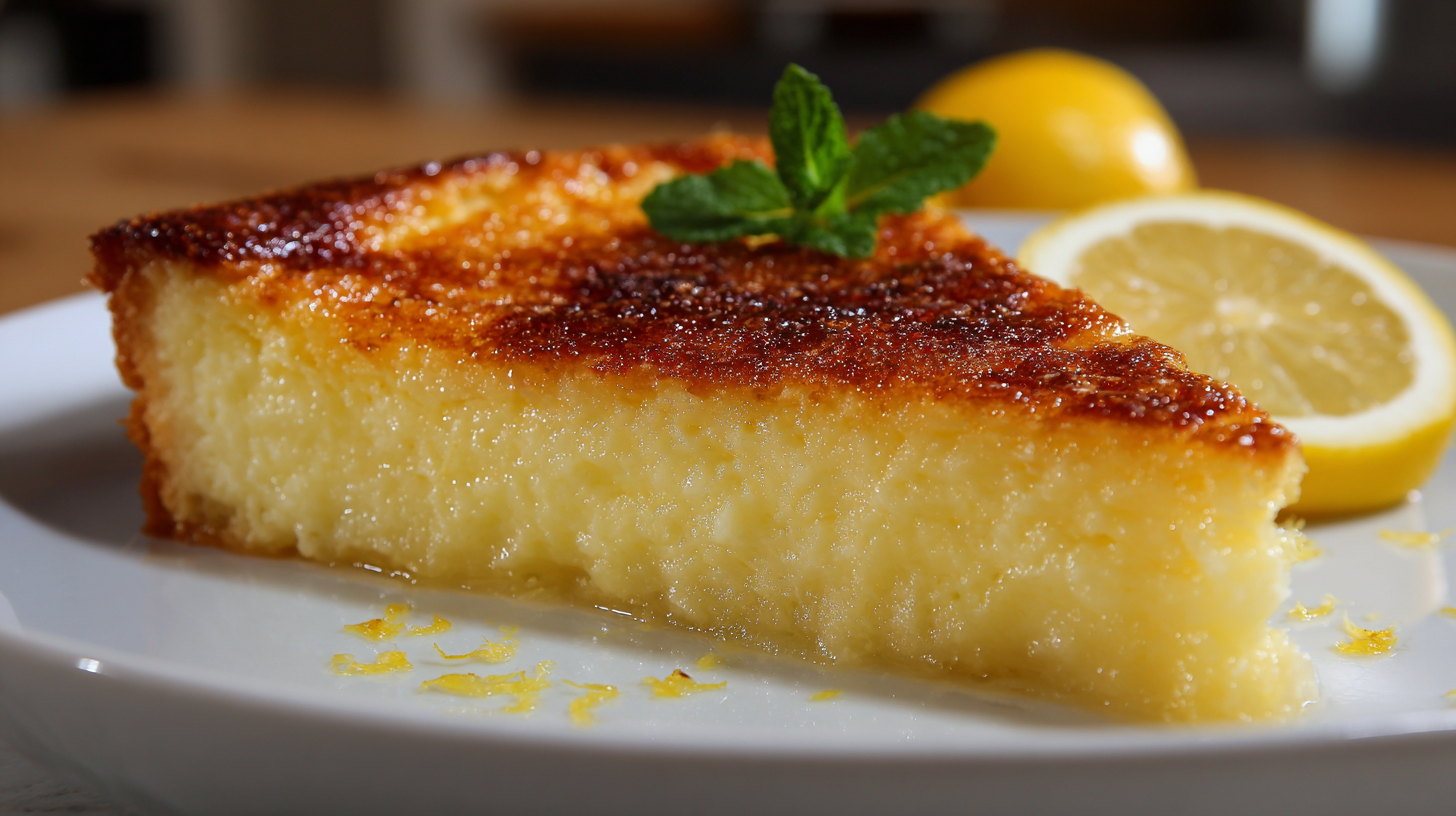
I tried it on a quiet Sunday afternoon, mostly out of curiosity. What happened in that oven genuinely amazed me. The layers formed all on their own, like magic. The bottom set into something firm and crust-like, the center turned rich and custardy, and the top browned into a beautiful golden finish. All from one single batter. No crust to roll out. No custard to cook on the stovetop. Just mix, pour, bake, and be amazed.
The images of this lemon impossible pie show thick, golden wedges on white plates, topped with thin slices of lemon and a sprig of fresh mint. The interior is pale, dense, and creamy — like a baked lemon custard with a rustic, caramelized outer layer. It looks sophisticated, but it is one of the simplest desserts you will ever make.
What Is Lemon Impossible Pie?
Lemon impossible pie is a retro American dessert, originally developed by Bisquick in the 1970s. It earned the name “impossible” because the batter magically separates during baking to form distinct layers — typically a bottom crust and a creamy custard filling — without any special technique or pre-made crust. It is sometimes called Magic Custard Pie, Amazing Pie, or Blender Pie, because you can mix the entire batter in a blender in just a few minutes.
The magic happens because of the way flour, eggs, and milk behave at different temperatures as they bake. The heavier components settle to the bottom and firm up into a crust while the lighter, egg-rich mixture stays soft and custardy in the middle.
Ingredients for Lemon Impossible Pie
- 4 large eggs
- 1 cup (200g) granulated sugar
- ½ cup (60g) all-purpose flour
- ½ cup (115g) unsalted butter, melted and slightly cooled
- 2 cups (480ml) whole milk
- ⅓ cup (80ml) fresh lemon juice (about 2–3 lemons)
- Zest of 1 large lemon
- 1 teaspoon vanilla extract
- Pinch of salt
- 1 cup (90g) desiccated coconut (optional, but traditional — it forms the crispy top crust)
- Powdered sugar, for dusting
- Thin lemon slices and fresh mint, for garnish
Step-by-Step Instructions
Step 1 — Preheat and Prepare
Preheat your oven to 350°F (175°C). Generously grease a deep 9-inch pie dish with butter or cooking spray. Set aside.
Step 2 — Make the Batter
In a large blender or mixing bowl, combine the eggs, sugar, and flour. Blend or whisk until smooth. Add the melted butter and blend again. Pour in the milk, lemon juice, lemon zest, vanilla extract, and a pinch of salt. Blend on low speed for about 2–3 minutes until everything is fully incorporated and smooth. If using coconut, stir it in last — do not blend it, as you want it to stay intact so it can rise to the top during baking.
Important: If using a blender, blend on low speed only. High speed introduces too much air and creates a foamy batter that won’t separate correctly during baking.
Step 3 — Rest the Batter
Pour the batter into the prepared pie dish. Let it sit and rest for 5 minutes before placing it in the oven. This short rest allows the batter to settle slightly and helps the magic separation work more reliably.
Step 4 — Bake
Bake at 350°F (175°C) for 40–50 minutes, or until the top is deeply golden and the center is almost set. It will still have a very slight wobble in the very center — that is normal. It will firm up as it cools.
Step 5 — Cool and Refrigerate
Remove from the oven and allow the pie to cool completely on a wire rack. The pie will deflate slightly as it cools — this is completely normal. Once at room temperature, cover and refrigerate for at least 2 hours, or overnight for the best flavor and texture. This lemon impossible pie is genuinely better the next day.
Step 6 — Garnish and Serve
Just before serving, dust the top generously with powdered sugar. Arrange thin lemon slices and fresh mint leaves on top. Cut into wedges and serve cold.
The Magic Explained — Why Does Impossible Pie Separate?
The science is surprisingly simple. When the batter goes into the oven, the heavier flour particles begin to sink while the eggs and butter create structure in the base. The lighter, milk-and-egg-rich middle remains soft and custardy. If you’ve added coconut, the coconut flakes are so light they float up to the surface during baking, crisping into that beautiful top crust. The result is three distinct layers from one batter — and that is why this lemon custard dessert feels like magic.
Nutritional Values (Per Serving, Based on 8 Servings)
| Nutrient | Amount |
|---|---|
| Calories | ~310 kcal |
| Carbohydrates | 32g |
| Fat | 17g |
| Saturated Fat | 10g |
| Protein | 6g |
| Sugar | 25g |
| Sodium | 95mg |
Presentation Tips for Lemon Impossible Pie
This magic custard dessert is already stunning — that golden, caramelized top is beautiful on its own. To elevate the presentation, dust with powdered sugar in a thick layer, add a couple of very thin lemon wheel slices in the center, and tuck a sprig of fresh mint alongside them. Serve on a matte white plate to make the golden tones of the pie pop. Individual wedges look gorgeous cut from the whole pie at the table.
Lemon Impossible Pie Variations and Substitutions
Without Coconut: Leave the coconut out entirely and you get a pure lemon custard pie. The texture is smooth all the way through, more like a baked custard or flan. Equally delicious.
Lime Impossible Pie: Swap the lemon juice and zest for lime. The result is sharper and more tropical. A perfect summertime twist.
Orange Impossible Pie: Replace lemon with fresh orange juice and orange zest. Add a little pinch of nutmeg for a holiday-inspired version.
Mini Impossible Pies: Bake the batter in a well-greased muffin tin for individual portions. Reduce the baking time to approximately 20–25 minutes. These are perfect for parties and gatherings.
Gluten-Free Option: Replace all-purpose flour with a gluten-free baking blend of the same quantity.
Food and Drink Pairings
Lemon impossible pie pairs wonderfully with a dollop of unsweetened whipped cream or crème fraîche on the side. For drinks, a glass of sweet Sauternes brings out the richness of the custard, while a chilled glass of sparkling lemonade is a perfect non-alcoholic companion. A pot of chamomile tea also works beautifully — the floral, slightly sweet notes complement the bright lemon perfectly.
Storage Tips
- Refrigerate covered for up to 5 days.
- Serve cold — the custard texture is best when chilled.
- Do not freeze — the custard will not survive the texture change after thawing.
- Dust with powdered sugar right before serving, not ahead of time.
Notes
- For the best flavor, always use fresh lemon juice and real lemon zest. Bottled lemon juice is flat in comparison.
- The center of the pie will wobble slightly when you remove it from the oven. Do not overbake — the custard will firm up as it cools and chills.
- This pie is even more flavorful after an overnight rest in the refrigerator. If you can wait, make it the day before you need it.
- Use a deep pie dish — the batter fills right to the top. Place your pie dish on a baking tray to catch any potential overflow.
FAQs About Lemon Impossible Pie
Why is it called Impossible Pie? The “impossible” refers to the way a pie forms its own crust during baking without any separate crust preparation. The batter magically separates into distinct layers in the oven. Some people also say it’s “impossible to mess up,” which is equally true.
Does lemon impossible pie need to be refrigerated? Yes, absolutely. This is a custard-based dessert and must be kept in the refrigerator. It is best served cold and keeps for up to 5 days.
Can I make lemon impossible pie without a blender? Yes — a large bowl and a hand whisk work perfectly. Make sure you whisk the batter thoroughly to avoid flour lumps.
Why didn’t my pie form layers? The most common reason is that the batter was blended on too high a speed, which introduces too much air. Blend or whisk gently on low speed for best results.
Can I use coconut milk instead of whole milk? Whole milk is recommended for the best custard texture. Some bakers have used full-fat coconut milk with good results, though the texture may be slightly denser and richer.
How do I know when the lemon impossible pie is done? The top should be a deep golden brown, the edges should be firm, and the center should have only a slight wobble when you gently shake the dish. A toothpick inserted near the center should come out mostly clean.
Conclusion
Lemon impossible pie is the kind of recipe that makes you feel like a kitchen genius without any real effort. One batter, one bowl, one baking dish — and out of the oven comes a structured, creamy, golden dessert that genuinely impresses everyone who eats it. It is perfect for those moments when you want to make something special but don’t have the time (or patience) to make a complicated dessert. It is a magical little pie, and once you make it, you’ll find yourself reaching for it again and again.
My personal tip: make this pie the night before you plan to serve it. That overnight chill in the refrigerator deepens the lemon flavor and improves the texture dramatically. Your guests will think you spent all day on it.
Print
Easy Magic Custard Dessert — Lemon Impossible Pie
Description
Lemon impossible pie is a retro American dessert, originally developed by Bisquick in the 1970s. It earned the name “impossible” because the batter magically separates during baking to form distinct layers — typically a bottom crust and a creamy custard filling — without any special technique or pre-made crust. It is sometimes called Magic Custard Pie, Amazing Pie, or Blender Pie, because you can mix the entire batter in a blender in just a few minutes.
Ingredients
Ingredients for Lemon Impossible Pie
- 4 large eggs
- 1 cup (200g) granulated sugar
- ½ cup (60g) all-purpose flour
- ½ cup (115g) unsalted butter, melted and slightly cooled
- 2 cups (480ml) whole milk
- ⅓ cup (80ml) fresh lemon juice (about 2–3 lemons)
- Zest of 1 large lemon
- 1 teaspoon vanilla extract
- Pinch of salt
- 1 cup (90g) desiccated coconut (optional, but traditional — it forms the crispy top crust)
- Powdered sugar, for dusting
- Thin lemon slices and fresh mint, for garnish
Instructions
Preheat your oven to 350°F (175°C). Generously grease a deep 9-inch pie dish with butter or cooking spray. Set aside.
In a large blender or mixing bowl, combine the eggs, sugar, and flour. Blend or whisk until smooth. Add the melted butter and blend again. Pour in the milk, lemon juice, lemon zest, vanilla extract, and a pinch of salt. Blend on low speed for about 2–3 minutes until everything is fully incorporated and smooth. If using coconut, stir it in last — do not blend it, as you want it to stay intact so it can rise to the top during baking.
Important: If using a blender, blend on low speed only. High speed introduces too much air and creates a foamy batter that won’t separate correctly during baking.
Pour the batter into the prepared pie dish. Let it sit and rest for 5 minutes before placing it in the oven. This short rest allows the batter to settle slightly and helps the magic separation work more reliably.
Bake at 350°F (175°C) for 40–50 minutes, or until the top is deeply golden and the center is almost set. It will still have a very slight wobble in the very center — that is normal. It will firm up as it cools.
Remove from the oven and allow the pie to cool completely on a wire rack. The pie will deflate slightly as it cools — this is completely normal. Once at room temperature, cover and refrigerate for at least 2 hours, or overnight for the best flavor and texture. This lemon impossible pie is genuinely better the next day.
Just before serving, dust the top generously with powdered sugar. Arrange thin lemon slices and fresh mint leaves on top. Cut into wedges and serve cold.
The science is surprisingly simple. When the batter goes into the oven, the heavier flour particles begin to sink while the eggs and butter create structure in the base. The lighter, milk-and-egg-rich middle remains soft and custardy. If you’ve added coconut, the coconut flakes are so light they float up to the surface during baking, crisping into that beautiful top crust. The result is three distinct layers from one batter — and that is why this lemon custard dessert feels like magic.
| Nutrient | Amount |
|---|---|
| Calories | ~310 kcal |
| Carbohydrates | 32g |
| Fat | 17g |
| Saturated Fat | 10g |
| Protein | 6g |
| Sugar | 25g |
| Sodium | 95mg |
This magic custard dessert is already stunning — that golden, caramelized top is beautiful on its own. To elevate the presentation, dust with powdered sugar in a thick layer, add a couple of very thin lemon wheel slices in the center, and tuck a sprig of fresh mint alongside them. Serve on a matte white plate to make the golden tones of the pie pop. Individual wedges look gorgeous cut from the whole pie at the table.
Without Coconut: Leave the coconut out entirely and you get a pure lemon custard pie. The texture is smooth all the way through, more like a baked custard or flan. Equally delicious.