When I first discovered Greek chicken bowls, it was during a particularly hot summer when I was craving something light, fresh, and absolutely bursting with flavor. I’d been to a Greek restaurant and fallen in love with their chicken souvlaki platter, but I wanted to recreate something similar at home that was healthy, easy to prepare, and perfect for meal prep. That’s when these Greek chicken bowls were born.
The combination of tender, perfectly seasoned chicken with crisp cucumbers, juicy tomatoes, tangy feta cheese, and creamy tzatziki sauce creates a harmony of Mediterranean flavors that never gets old. Each bite is a celebration of fresh ingredients and bold seasonings that transport you straight to a sun-drenched Greek island.
These Greek chicken bowls have become my go-to meal when I want something that feels indulgent but is actually incredibly nutritious. They’re colorful, satisfying, and endlessly customizable. Whether you’re looking for a healthy lunch option, a light dinner, or impressive meal prep for the week ahead, these bowls check every box.
Why Greek Chicken Bowls Are Perfect Year-Round
While many dishes are seasonal, Greek chicken bowls work beautifully any time of year. The fresh vegetables and bright flavors are particularly welcome during warmer months, but the heartiness of the chicken and satisfying nature of the bowl makes it comforting even in cooler weather.
The beauty of this dish lies in its components. Juicy chicken breast is marinated in a blend of olive oil, lemon juice, garlic, and Mediterranean herbs, then cooked until perfectly tender with beautiful golden-brown marks. The chicken is sliced and arranged over a bed of fresh greens or grains, then surrounded by vibrant vegetables and topped with creamy, herbed tzatziki sauce.
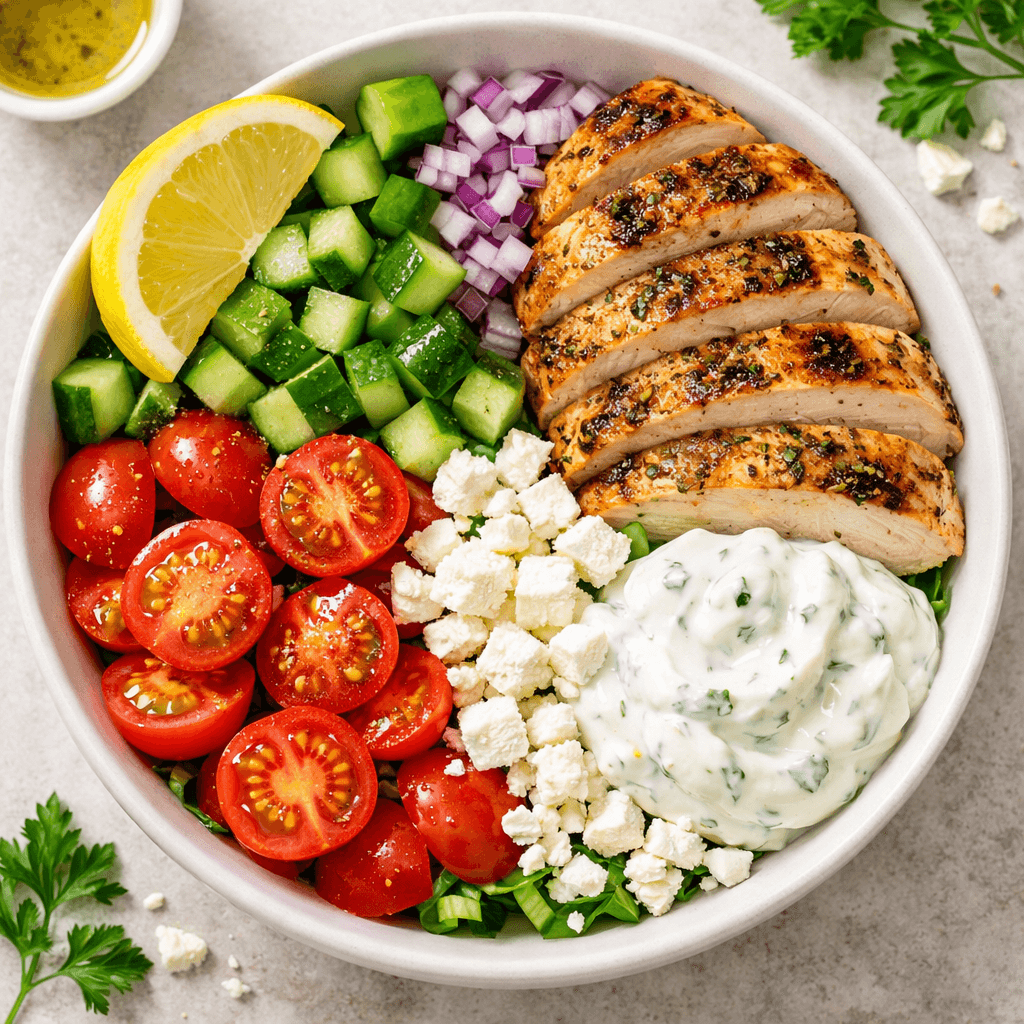
When you look at a properly assembled Greek chicken bowl, you’ll see perfectly sliced chicken with herb seasoning visible on its golden surface, nestled among bright green cucumbers, ruby red tomatoes, purple red onions, snowy white feta cheese, and a generous dollop of white tzatziki sauce flecked with herbs. It’s a feast for the eyes that tastes even better than it looks.
Essential Ingredients for Greek Chicken Bowls
Creating authentic Greek chicken bowls requires quality ingredients that capture the essence of Mediterranean cuisine. Here’s what you’ll need.
Greek Marinated Chicken:
- 1.5 lbs boneless, skinless chicken breasts
- ¼ cup extra virgin olive oil
- 3 tablespoons fresh lemon juice
- 4 cloves garlic, minced
- 2 teaspoons dried oregano
- 1 teaspoon dried basil
- 1 teaspoon paprika
- ½ teaspoon ground cumin
- Salt and freshly ground black pepper to taste
- Fresh parsley for garnish
Tzatziki Sauce:
- 1 cup Greek yogurt (full-fat for best flavor)
- 1 medium cucumber, grated and excess water squeezed out
- 2 cloves garlic, minced
- 1 tablespoon fresh lemon juice
- 1 tablespoon fresh dill, chopped (or 1 teaspoon dried)
- 1 tablespoon extra virgin olive oil
- Salt and pepper to taste
Bowl Components:
- 4 cups mixed greens or romaine lettuce, chopped
- 2 cups cherry tomatoes, halved
- 1 large cucumber, diced
- ½ red onion, thinly sliced
- 1 cup crumbled feta cheese
- ½ cup Kalamata olives, pitted
- 1 lemon, cut into wedges
- Fresh parsley and dill for garnish
Optional Additions:
- Cooked quinoa, couscous, or rice for the base
- Chickpeas for extra protein and fiber
- Roasted red peppers for sweetness
- Artichoke hearts for authentic Mediterranean flavor
How to Make Perfect Greek Chicken Bowls
Creating restaurant-quality Greek chicken bowls at home is easier than you might think. Let me guide you through each component.
Preparing the Greek Chicken Marinade
The marinade is the foundation of flavor for your Greek chicken bowls. In a medium bowl, whisk together the olive oil, lemon juice, minced garlic, oregano, basil, paprika, and cumin. Season generously with salt and freshly ground black pepper. The mixture should be well combined and fragrant—the smell alone will make your mouth water.
Place your chicken breasts in a large resealable bag or shallow dish. If your chicken breasts are particularly thick (more than 1 inch), butterfly them or pound them to an even thickness for more consistent cooking. Pour the marinade over the chicken, making sure each piece is completely coated.
Seal the bag or cover the dish and refrigerate for at least 30 minutes, though 2-4 hours is ideal. The longer the chicken marinates, the more flavorful it becomes. I’ve even marinated it overnight when I’m planning ahead, and the results are phenomenal. Just don’t marinate for more than 24 hours, as the acid in the lemon juice can start to break down the chicken’s texture.
Cooking the Chicken to Perfection
When you’re ready to cook, remove the chicken from the refrigerator and let it sit at room temperature for about 10-15 minutes. This ensures more even cooking. Preheat your grill, grill pan, or a large skillet over medium-high heat.
If using a grill or grill pan, make sure it’s well-oiled to prevent sticking. Place the chicken on the hot surface and cook for 6-7 minutes on the first side without moving it—this creates those beautiful grill marks. Flip and cook for another 6-7 minutes, or until the internal temperature reaches 165°F (74°C).
The exact cooking time will depend on the thickness of your chicken breasts. Thinner pieces will cook faster, while thicker ones may need an extra minute or two per side. Using a meat thermometer takes the guesswork out of the equation.
Once cooked, transfer the chicken to a cutting board and let it rest for 5 minutes. This resting period allows the juices to redistribute throughout the meat, ensuring every slice is tender and juicy. After resting, slice the chicken diagonally into strips about ½-inch thick.
Making Authentic Tzatziki Sauce
While the chicken is marinating, you can prepare your tzatziki sauce. This creamy, garlicky cucumber sauce is what really makes Greek chicken bowls special. Start by grating your cucumber using the large holes of a box grater. Place the grated cucumber in a clean kitchen towel or several layers of paper towels and squeeze firmly to remove as much liquid as possible. This step is crucial—excess water will make your tzatziki watery and bland.
In a medium bowl, combine the Greek yogurt, squeezed cucumber, minced garlic, lemon juice, chopped dill, and olive oil. Stir everything together until well combined. Season with salt and pepper to taste. The sauce should be thick, creamy, and perfectly balanced between tangy, garlicky, and fresh.
Cover and refrigerate the tzatziki for at least 30 minutes before serving. This chilling time allows the flavors to meld together beautifully. Tzatziki actually tastes even better the next day, so don’t hesitate to make it ahead.
Preparing the Fresh Vegetables
The vegetables in Greek chicken bowls should be fresh, crisp, and cut into bite-sized pieces. Wash and thoroughly dry your mixed greens or chopped romaine lettuce. Halve the cherry tomatoes—I like to use a mix of red and yellow if available for extra color.
Dice the cucumber into small cubes, about ½-inch pieces. If you’re using an English cucumber, you don’t need to peel it, but regular cucumbers should be peeled if they have a thick or waxy skin.
Thinly slice the red onion. If you find raw onion too sharp, you can mellow it by soaking the slices in cold water for 10 minutes, then draining and patting dry. This removes some of the sulfuric compounds that cause that harsh bite.
Crumble your feta cheese if it came in a block, or use pre-crumbled if that’s what you have. I prefer block feta as it tends to be creamier and more flavorful, but pre-crumbled works in a pinch.
Assembling Your Greek Chicken Bowl
Now comes the fun part—assembling your beautiful Greek chicken bowls. Start with your base. If you’re using greens, place about 1-1.5 cups in a large bowl or on a plate. If you prefer a grain base, add about ¾ cup of cooked quinoa, rice, or couscous.
Arrange your components in sections around the bowl for the most visually appealing presentation. Place a portion of sliced Greek chicken prominently in the center or to one side. Arrange sections of cherry tomatoes, diced cucumbers, sliced red onion, and Kalamata olives around the bowl.
Sprinkle the crumbled feta cheese generously over everything. Add a generous dollop of tzatziki sauce on the side or drizzle it over the entire bowl—I personally love having it on the side so I can control how much I use with each bite.
Garnish with fresh parsley and dill, and serve with lemon wedges on the side. The fresh lemon juice squeezed over the bowl just before eating adds a bright, fresh note that ties everything together.
The final presentation should be a colorful, abundant-looking bowl with distinct sections of each ingredient, the golden herb-crusted chicken as the star, white feta sprinkled throughout, and the creamy white tzatziki sauce ready to bring it all together.
Nutritional Benefits of Greek Chicken Bowls
One of the things I love most about Greek chicken bowls is how nutritious they are without any sacrifice in flavor. Here’s the approximate nutritional breakdown for one complete bowl:
- Calories: 425
- Protein: 38g
- Total Fat: 22g
- Saturated Fat: 7g
- Carbohydrates: 18g
- Dietary Fiber: 4g
- Sugars: 8g
- Sodium: 520mg
- Vitamin A: 45% DV
- Vitamin C: 85% DV
- Calcium: 25% DV
- Iron: 12% DV
The lean chicken provides high-quality protein that keeps you satisfied for hours. The Greek yogurt in the tzatziki adds probiotics and additional protein. The vegetables deliver vitamins, minerals, and fiber, while the olive oil provides healthy monounsaturated fats that are good for your heart.
Feta cheese, while higher in sodium, is actually lower in fat and calories than many other cheeses and provides calcium and protein. The overall Mediterranean-style eating pattern represented by this bowl has been associated with numerous health benefits, including heart health and longevity.
Creative Variations for Your Greek Bowls
While the classic Greek chicken bowl is perfection, there are many ways to customize it to your preferences or dietary needs.
Protein Alternatives
Swap the chicken for lamb for a more traditional Greek flavor—use the same marinade on lamb chops or ground lamb. Salmon also works beautifully with Greek flavors; marinate salmon fillets and grill or bake them.
For a vegetarian version, use the Greek marinade on extra-firm tofu, halloumi cheese, or grilled portobello mushrooms. Chickpeas are another excellent plant-based protein that fits perfectly with Greek flavors.
Base Options
While greens are classic, using warm quinoa or rice creates a heartier bowl perfect for cooler weather. Cauliflower rice is an excellent low-carb option. For a completely grain-free option, use spiralized zucchini as your base.
Orzo pasta tossed with a little olive oil and lemon makes for a more indulgent version that’s still delicious.
Additional Toppings
Roasted red peppers add sweetness and depth. Marinated artichoke hearts provide that classic Mediterranean flavor. Sun-dried tomatoes bring concentrated tomato flavor and a chewy texture.
For extra crunch, add toasted pine nuts or slivered almonds. A sprinkle of za’atar or sumac adds authentic Middle Eastern flavor that complements the Greek elements beautifully.
Sauce Variations
While tzatziki is traditional, you can also serve these bowls with hummus, tahini sauce, or a lemon-herb vinaigrette. For a spicy kick, add some harissa sauce or a drizzle of spicy yogurt sauce.
Meal Prep and Storage Tips
Greek chicken bowls are ideal for meal prep, making your healthy eating goals much more attainable.
Preparing Components in Advance
The chicken can be marinated and stored in the refrigerator for up to 24 hours before cooking. Once cooked, it keeps well for 4 days in the refrigerator. Store it separately from the other components to prevent everything from getting soggy.
The tzatziki sauce is actually better when made ahead—the flavors develop and deepen over time. It keeps well in the refrigerator for up to 5 days in an airtight container.
Chop your vegetables up to 2 days ahead and store them in separate containers. Keep wetter ingredients like tomatoes and cucumbers separate from the greens to prevent wilting.
Storing Assembled Bowls
If you’re meal prepping full bowls, store all components separately in individual containers. Pack the greens in one container, the chicken in another, vegetables in a third, and tzatziki in a small separate container.
When you’re ready to eat, assemble the bowl fresh. If you must assemble ahead, keep the tzatziki and feta separate until serving time to prevent sogginess.
Freezing Guidelines
The cooked, marinated chicken freezes beautifully for up to 3 months. Let it cool completely, then freeze in portion-sized amounts. Thaw overnight in the refrigerator before using.
I don’t recommend freezing the vegetables or tzatziki sauce, as they don’t maintain their texture well after thawing. The dairy in tzatziki can separate, and the vegetables become mushy.
Serving Suggestions and Pairing Ideas
Greek chicken bowls are a complete meal on their own, but there are several ways to enhance your Mediterranean dining experience.
Side Dishes
Warm pita bread is perfect for scooping up extra tzatziki or vegetables. You can brush the pita with olive oil and warm it on the grill for extra flavor.
Greek-style roasted potatoes with lemon and oregano make an excellent heartier side. Spanakopita (spinach pie) or dolmas (stuffed grape leaves) add authenticity if you’re serving these bowls for guests.
A simple tomato and cucumber salad dressed with olive oil, lemon, and oregano complements the bowls without being redundant.
Beverage Pairings
A crisp white wine like Assyrtiko or Sauvignon Blanc pairs beautifully with the bright, fresh flavors. For red wine lovers, a light-bodied Pinot Noir won’t overpower the meal.
For non-alcoholic options, sparkling water with lemon and mint is refreshing. Greek mountain tea or chamomile tea makes a nice after-dinner beverage.
Frequently Asked Questions About Greek Chicken Bowls
Can I use chicken thighs instead of breasts? Absolutely! Boneless, skinless chicken thighs work wonderfully and stay even juicier than breasts. They may need an extra minute or two of cooking time. The same marinade works perfectly.
How do I make this dairy-free? Use coconut yogurt in place of Greek yogurt for the tzatziki, and simply omit the feta cheese or use a dairy-free alternative. The bowl is still delicious without the feta, though I do miss its tangy, salty contribution.
Can I use store-bought tzatziki? You can, but homemade is so much better and surprisingly easy. Store-bought versions often contain stabilizers and don’t have the same fresh, bright flavor. If you must use store-bought, look for refrigerated varieties from the deli section rather than shelf-stable versions.
How do I prevent the chicken from drying out? Don’t overcook it—use a meat thermometer to check for 165°F and remove it from heat immediately. Let it rest before slicing. The marinade also helps keep it moist, so don’t skip the marinating step.
Can I make this bowl warm instead of cold? Yes! Use warm rice or quinoa as your base and serve the chicken immediately after cooking while it’s still hot. You can even warm the pita bread. The contrast of warm chicken with cool, crisp vegetables and cold tzatziki is actually quite nice.
What other herbs can I use? Fresh mint is wonderful in both the marinade and tzatziki. Fresh oregano can replace dried oregano in the marinade—use about triple the amount. Cilantro is not traditional but adds nice freshness if you enjoy it.
Tips for Perfect Greek Chicken Bowls Every Time
After making these Greek chicken bowls countless times, I’ve learned some tricks that ensure perfect results.
Marinating for Maximum Flavor
While 30 minutes is the minimum marinating time, 2-4 hours is ideal for the most flavorful chicken. Turn the bag or stir the marinade occasionally to ensure even coating.
Save a little bit of the marinade before adding the raw chicken to use for basting during cooking or drizzling over the assembled bowl. Never use marinade that has touched raw chicken without cooking it first.
Achieving Perfect Grill Marks
Make sure your grill or pan is properly preheated—medium-high heat is ideal. Oil the grates or pan well to prevent sticking. Most importantly, resist the urge to move the chicken around. Let it sit undisturbed for the full cooking time on each side to develop those beautiful brown marks.
Getting the Best Tzatziki Consistency
The key to thick, creamy tzatziki is removing as much water as possible from the cucumber. After squeezing it in a towel, you can even squeeze it in small batches directly in your fist over the sink.
Use full-fat Greek yogurt rather than low-fat for the best flavor and texture. The extra fat makes a noticeable difference in creaminess and richness.
Presentation Matters
Take an extra minute to arrange your bowl thoughtfully. Having distinct sections of each ingredient rather than everything mixed together creates visual appeal and allows people to customize each bite.
Fan out the sliced chicken to show off any grill marks or herb seasoning. Sprinkle the feta and herbs over the top just before serving so they’re visible and fresh-looking.
My Personal Journey with Greek Chicken Bowls
I first fell in love with Greek cuisine during a college trip to Athens. The combination of fresh vegetables, grilled meats, and tangy yogurt sauces was unlike anything I’d experienced before. When I returned home, I was determined to recreate those flavors in my own kitchen.
My first attempts at Greek chicken bowls were good but not quite right—the chicken was sometimes dry, the tzatziki too watery, the vegetables not quite fresh enough. But I kept refining the recipe, adjusting the marinade, perfecting the tzatziki, and learning how to source the best ingredients.
The breakthrough came when I realized that the secret was in the details: properly resting the chicken after cooking, thoroughly draining the cucumber for tzatziki, and using good quality olive oil and freshly squeezed lemon juice rather than bottled.
Now, these Greek chicken bowls are a regular feature in my meal prep routine. They’re the meal I make when friends come over and want something healthy but impressive. They’re what I crave when I want food that makes me feel good both while eating it and afterward.
Conclusion: A Bowl That Brings the Mediterranean to Your Table
Greek chicken bowls represent everything wonderful about Mediterranean cuisine: fresh ingredients, bold flavors, healthy fats, and a eating style that’s as much about enjoyment as it is about nutrition.
The perfectly marinated and grilled chicken provides satisfying protein with incredible flavor. The crisp, fresh vegetables add crunch and vitality to every bite. The tangy feta and creamy tzatziki bring richness and depth that tie everything together beautifully.
Whether you’re looking for healthy meal prep options, impressive yet easy entertaining food, or simply a delicious dinner that happens to be good for you, these Greek chicken bowls deliver on every level.
The beauty of this recipe is its flexibility. make it exactly as written for an authentic experience, or customize it with your favorite vegetables, proteins, and additions. You can serve it on greens for a lighter meal or over grains for something more substantial. You can make every component from scratch or use a few shortcuts when time is tight.
What remains constant is the fresh, vibrant flavor that makes you feel like you’re dining at a Mediterranean seaside café, no matter where you actually are.
So fire up that grill, whip up some tzatziki, and get ready to create a bowl that’s as beautiful as it is delicious. Gather your freshest vegetables, choose your base, and assemble a meal that celebrates simple ingredients treated with respect and brought together with care.
My final tip for Greek chicken bowls? Don’t skip the lemon wedge garnish. That final squeeze of fresh lemon juice over the assembled bowl just before eating brightens every flavor and brings all the components into perfect harmony. It’s a small detail that makes a big difference. Kali orexi—good appetite!
Print
Greek Chicken Bowls: A Fresh Mediterranean-Inspired Meal
Description
Why Greek Chicken Bowls Are Perfect Year-Round
While many dishes are seasonal, Greek chicken bowls work beautifully any time of year. The fresh vegetables and bright flavors are particularly welcome during warmer months, but the heartiness of the chicken and satisfying nature of the bowl makes it comforting even in cooler weather.
The beauty of this dish lies in its components. Juicy chicken breast is marinated in a blend of olive oil, lemon juice, garlic, and Mediterranean herbs, then cooked until perfectly tender with beautiful golden-brown marks. The chicken is sliced and arranged over a bed of fresh greens or grains, then surrounded by vibrant vegetables and topped with creamy, herbed tzatziki sauce.
Ingredients
Essential Ingredients for Greek Chicken Bowls
Creating authentic Greek chicken bowls requires quality ingredients that capture the essence of Mediterranean cuisine. Here’s what you’ll need.
Greek Marinated Chicken:
- 1.5 lbs boneless, skinless chicken breasts
- ¼ cup extra virgin olive oil
- 3 tablespoons fresh lemon juice
- 4 cloves garlic, minced
- 2 teaspoons dried oregano
- 1 teaspoon dried basil
- 1 teaspoon paprika
- ½ teaspoon ground cumin
- Salt and freshly ground black pepper to taste
- Fresh parsley for garnish
Tzatziki Sauce:
- 1 cup Greek yogurt (full-fat for best flavor)
- 1 medium cucumber, grated and excess water squeezed out
- 2 cloves garlic, minced
- 1 tablespoon fresh lemon juice
- 1 tablespoon fresh dill, chopped (or 1 teaspoon dried)
- 1 tablespoon extra virgin olive oil
- Salt and pepper to taste
Bowl Components:
- 4 cups mixed greens or romaine lettuce, chopped
- 2 cups cherry tomatoes, halved
- 1 large cucumber, diced
- ½ red onion, thinly sliced
- 1 cup crumbled feta cheese
- ½ cup Kalamata olives, pitted
- 1 lemon, cut into wedges
- Fresh parsley and dill for garnish
Optional Additions:
- Cooked quinoa, couscous, or rice for the base
- Chickpeas for extra protein and fiber
- Roasted red peppers for sweetness
- Artichoke hearts for authentic Mediterranean flavor
Instructions
The marinade is the foundation of flavor for your Greek chicken bowls. In a medium bowl, whisk together the olive oil, lemon juice, minced garlic, oregano, basil, paprika, and cumin. Season generously with salt and freshly ground black pepper. The mixture should be well combined and fragrant—the smell alone will make your mouth water.
Place your chicken breasts in a large resealable bag or shallow dish. If your chicken breasts are particularly thick (more than 1 inch), butterfly them or pound them to an even thickness for more consistent cooking. Pour the marinade over the chicken, making sure each piece is completely coated.
Seal the bag or cover the dish and refrigerate for at least 30 minutes, though 2-4 hours is ideal. The longer the chicken marinates, the more flavorful it becomes. I’ve even marinated it overnight when I’m planning ahead, and the results are phenomenal. Just don’t marinate for more than 24 hours, as the acid in the lemon juice can start to break down the chicken’s texture.
When you’re ready to cook, remove the chicken from the refrigerator and let it sit at room temperature for about 10-15 minutes. This ensures more even cooking. Preheat your grill, grill pan, or a large skillet over medium-high heat.
If using a grill or grill pan, make sure it’s well-oiled to prevent sticking. Place the chicken on the hot surface and cook for 6-7 minutes on the first side without moving it—this creates those beautiful grill marks. Flip and cook for another 6-7 minutes, or until the internal temperature reaches 165°F (74°C).
The exact cooking time will depend on the thickness of your chicken breasts. Thinner pieces will cook faster, while thicker ones may need an extra minute or two per side. Using a meat thermometer takes the guesswork out of the equation.
Once cooked, transfer the chicken to a cutting board and let it rest for 5 minutes. This resting period allows the juices to redistribute throughout the meat, ensuring every slice is tender and juicy. After resting, slice the chicken diagonally into strips about ½-inch thick.
While the chicken is marinating, you can prepare your tzatziki sauce. This creamy, garlicky cucumber sauce is what really makes Greek chicken bowls special. Start by grating your cucumber using the large holes of a box grater. Place the grated cucumber in a clean kitchen towel or several layers of paper towels and squeeze firmly to remove as much liquid as possible. This step is crucial—excess water will make your tzatziki watery and bland.
In a medium bowl, combine the Greek yogurt, squeezed cucumber, minced garlic, lemon juice, chopped dill, and olive oil. Stir everything together until well combined. Season with salt and pepper to taste. The sauce should be thick, creamy, and perfectly balanced between tangy, garlicky, and fresh.
Cover and refrigerate the tzatziki for at least 30 minutes before serving. This chilling time allows the flavors to meld together beautifully. Tzatziki actually tastes even better the next day, so don’t hesitate to make it ahead.
The vegetables in Greek chicken bowls should be fresh, crisp, and cut into bite-sized pieces. Wash and thoroughly dry your mixed greens or chopped romaine lettuce. Halve the cherry tomatoes—I like to use a mix of red and yellow if available for extra color.
Dice the cucumber into small cubes, about ½-inch pieces. If you’re using an English cucumber, you don’t need to peel it, but regular cucumbers should be peeled if they have a thick or waxy skin.
Thinly slice the red onion. If you find raw onion too sharp, you can mellow it by soaking the slices in cold water for 10 minutes, then draining and patting dry. This removes some of the sulfuric compounds that cause that harsh bite.
Crumble your feta cheese if it came in a block, or use pre-crumbled if that’s what you have. I prefer block feta as it tends to be creamier and more flavorful, but pre-crumbled works in a pinch.
Now comes the fun part—assembling your beautiful Greek chicken bowls. Start with your base. If you’re using greens, place about 1-1.5 cups in a large bowl or on a plate. If you prefer a grain base, add about ¾ cup of cooked quinoa, rice, or couscous.
Arrange your components in sections around the bowl for the most visually appealing presentation. Place a portion of sliced Greek chicken prominently in the center or to one side. Arrange sections of cherry tomatoes, diced cucumbers, sliced red onion, and Kalamata olives around the bowl.
Sprinkle the crumbled feta cheese generously over everything. Add a generous dollop of tzatziki sauce on the side or drizzle it over the entire bowl—I personally love having it on the side so I can control how much I use with each bite.
Garnish with fresh parsley and dill, and serve with lemon wedges on the side. The fresh lemon juice squeezed over the bowl just before eating adds a bright, fresh note that ties everything together.
The final presentation should be a colorful, abundant-looking bowl with distinct sections of each ingredient, the golden herb-crusted chicken as the star, white feta sprinkled throughout, and the creamy white tzatziki sauce ready to bring it all together.