The first time I made Greek chicken bowls, I had just returned from a trip to Greece where I’d fallen completely in love with the fresh, vibrant flavors of Mediterranean cuisine. I was craving those sun-drenched flavors but needed something I could prepare quickly on a busy weeknight. These bowls became my solution—all the amazing flavors of Greek cuisine assembled in one convenient, nutritious bowl. The combination of tender, herb-marinated chicken, crisp vegetables, creamy tzatziki, tangy feta, and briny olives transported me right back to that little taverna overlooking the Aegean Sea. Now, these Mediterranean chicken bowls have become my weekly meal prep staple.
Why Greek Chicken Bowls Are the Ultimate Healthy Meal
Greek chicken bowls represent the perfect intersection of nutrition, convenience, and incredible flavor. They embody the principles of the Mediterranean diet—one of the world’s healthiest eating patterns—by combining lean protein, abundant vegetables, healthy fats, and whole grains. What makes these bowls truly special is how each component contributes distinct flavors and textures that work together harmoniously.
The beauty of a Greek chicken bowl lies in its customizability. Whether you’re meal prepping for the week, looking for a quick weeknight dinner, or need something impressive for guests, these bowls deliver. They’re naturally gluten-free (when served over rice or without grains), can be made low-carb, and are endlessly adaptable to dietary preferences and what you have available. Plus, they’re as visually stunning as they are delicious—that colorful array of ingredients makes every meal feel special.
The Mediterranean Magic Behind Greek Chicken Bowls
The secret to authentic Greek chicken bowls starts with the marinade. Greek cuisine relies heavily on a few key ingredients—extra virgin olive oil, lemon, garlic, and dried oregano—to create that distinctive Mediterranean flavor. When these ingredients combine with chicken and have time to meld, they create something magical. The acid in the lemon tenderizes the meat while infusing it with bright flavor, the olive oil keeps it juicy, and the oregano provides that unmistakably Greek herbal note.
The vegetables in a Greek bowl aren’t just afterthoughts—they’re essential flavor and texture components. Fresh, crisp cucumbers provide cool crunch. Tomatoes add juicy sweetness. Red onions contribute sharp bite. Kalamata olives bring briny depth. And the feta cheese—tangy, salty, creamy—ties everything together. Each element has a purpose, creating layers of flavor that keep every bite interesting.
Essential Ingredients for Greek Chicken Bowls
To create authentic, restaurant-quality Mediterranean chicken bowls, gather these ingredients:
For the Greek Chicken:
- 2 pounds boneless, skinless chicken breasts or thighs
- ⅓ cup extra virgin olive oil
- ¼ cup fresh lemon juice (about 2 lemons)
- 4 cloves garlic, minced
- 2 tablespoons red wine vinegar
- 1 tablespoon dried oregano
- 1 teaspoon dried thyme
- 1 teaspoon paprika
- ½ teaspoon ground cumin
- 1 teaspoon salt
- ½ teaspoon black pepper
- 1 teaspoon lemon zest
For the Bowl Components:
- 3 cups cooked rice, quinoa, or orzo (or cauliflower rice for low-carb)
- 2 cups cherry tomatoes, halved
- 2 English cucumbers, diced
- 1 red onion, thinly sliced
- 1 cup Kalamata olives, pitted
- 1½ cups crumbled feta cheese
- Fresh parsley, chopped for garnish
- Lemon wedges for serving
For the Tzatziki Sauce:
- 1 cup Greek yogurt (full-fat for creamiest texture)
- 1 English cucumber, grated and squeezed dry
- 2 cloves garlic, minced
- 2 tablespoons fresh lemon juice
- 1 tablespoon extra virgin olive oil
- 1 tablespoon fresh dill, chopped
- Salt and pepper to taste
The quality of your ingredients significantly impacts these Greek chicken bowls. Use authentic Greek extra virgin olive oil if possible—its fruity, peppery flavor is distinctive. Real feta cheese (made from sheep’s or goat’s milk) has a tangy, creamy quality that domestic “feta-style” cheese cannot replicate. Kalamata olives, with their wine-soaked richness, are essential to achieving authentic flavor.
Step-by-Step Guide to Perfect Greek Chicken Bowls
Marinating the Chicken
In a large bowl or resealable plastic bag, combine the olive oil, lemon juice, minced garlic, red wine vinegar, oregano, thyme, paprika, cumin, salt, pepper, and lemon zest. Whisk or shake until well combined. Add the chicken, ensuring each piece is thoroughly coated with marinade.
Ideally, marinate the chicken for at least 2 hours, but preferably 4-6 hours or even overnight in the refrigerator. This extended marination time allows the flavors to penetrate deeply and the acid to tenderize the meat. If you’re really pressed for time, even 30 minutes will provide some flavor, though longer is always better for these Mediterranean chicken bowls.
Making the Tzatziki Sauce
While the chicken marinates, prepare your tzatziki. Grate the cucumber using a box grater, then place the shreds in a clean kitchen towel or cheesecloth and squeeze firmly over the sink to remove as much liquid as possible. This step is crucial—excess cucumber water will make your tzatziki watery and dilute the flavors.
In a medium bowl, combine the squeezed cucumber with Greek yogurt, minced garlic, lemon juice, olive oil, fresh dill, salt, and pepper. Stir until well combined. Cover and refrigerate for at least 30 minutes to allow the flavors to meld. Tzatziki actually improves after several hours or overnight in the fridge, making it perfect for meal prep alongside your Greek chicken bowls.
Cooking the Greek Chicken
Remove the chicken from the marinade (discard the used marinade). You have several cooking options:
Grilling Method (My Favorite): Preheat your grill to medium-high heat. Grill the chicken for 5-7 minutes per side until it reaches an internal temperature of 165°F (74°C). The char marks add wonderful flavor and visual appeal to your Greek chicken bowl.
Pan-Searing Method: Heat 2 tablespoons of olive oil in a large skillet over medium-high heat. Cook the chicken for 6-7 minutes per side until golden brown and cooked through. This method creates a beautifully caramelized crust.
Oven-Roasting Method: Preheat your oven to 425°F (220°C). Place the chicken on a lined baking sheet and roast for 20-25 minutes until the internal temperature reaches 165°F. This hands-off method is perfect when making large batches.
Once cooked, let the chicken rest for 5 minutes before slicing. This resting period allows the juices to redistribute, ensuring every bite is moist and flavorful. Slice the chicken against the grain into strips—this makes it tender and easy to eat in your Mediterranean chicken bowls.
Preparing the Bowl Components
While the chicken cooks (or ahead of time for meal prep), prepare your vegetables. Halve the cherry tomatoes, dice the cucumbers into bite-sized pieces, and thinly slice the red onions. If raw onions are too sharp for your taste, soak the slices in cold water for 10 minutes, then drain—this removes some of the bite while maintaining crunch.
Prepare your grain base. I love using warm rice (white or brown), but room-temperature quinoa, orzo pasta, or even a bed of mixed greens all work beautifully. For a low-carb version, cauliflower rice is excellent—it soaks up the juices and dressing without adding many calories.
Assembling Your Greek Chicken Bowl
This is where your Greek chicken bowls come to life! There’s an art to bowl assembly that maximizes both visual appeal and eating experience:
Start with your grain or greens as the base—about 1-1½ cups per bowl. Arrange the sliced chicken prominently on one side. On the other side, create colorful sections of your vegetables: a mound of tomatoes, a section of cucumbers, scattered olives. Add generous crumbles of feta cheese over everything. Drizzle or dollop the tzatziki sauce over the top (about ¼ cup per bowl). Garnish with fresh chopped parsley and a lemon wedge for squeezing.
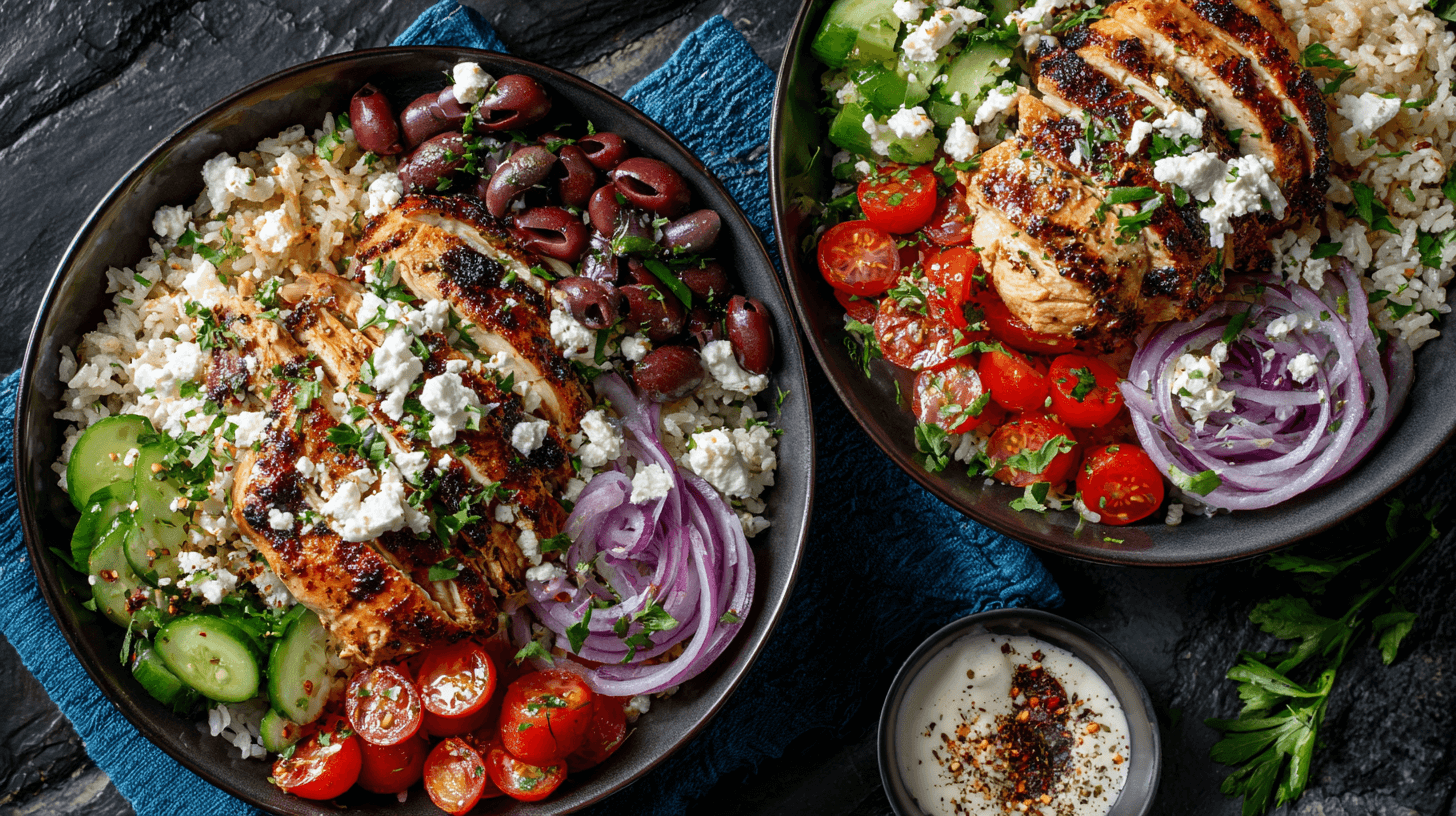
The visual presentation should showcase the beautiful colors—the golden-brown chicken with char marks, bright red tomatoes, green cucumbers, purple onions, dark olives, and white feta. This colorful arrangement makes your Mediterranean chicken bowls Instagram-worthy and appetite-stimulating.
Nutritional Benefits of Greek Chicken Bowls
These Greek chicken bowls aren’t just delicious—they’re nutritional powerhouses. Per bowl (based on 4 servings):
- Calories: 620
- Protein: 48g
- Total Fat: 28g
- Saturated Fat: 8g
- Carbohydrates: 48g
- Fiber: 6g
- Sugar: 8g
- Sodium: 980mg
The protein-rich chicken combined with fiber from vegetables and whole grains creates a satisfying, blood-sugar-stabilizing meal. The olive oil provides healthy monounsaturated fats that support heart health. Feta cheese adds calcium and additional protein. The abundance of vegetables contributes vitamins, minerals, and antioxidants.
This nutrient profile aligns perfectly with the Mediterranean diet, which has been extensively studied and associated with reduced risks of heart disease, diabetes, and cognitive decline. When you enjoy these Greek chicken bowls, you’re not just treating your taste buds—you’re nourishing your body in one of the healthiest ways possible.
Serving Suggestions and Presentation Ideas
As shown in the stunning image, the presentation of Greek chicken bowls is half the appeal. That beautiful arrangement of perfectly grilled chicken slices fanned across a bed of greamy vegetables, with creamy white tzatziki, crumbled feta, and glistening olive oil creates a feast for the eyes before you even take a bite.
Here are my favorite serving and presentation tips:
Individual Bowls: Use wide, shallow bowls that showcase the ingredients. Arrange components in sections rather than mixing everything together—this creates visual interest and lets people combine flavors as they eat. The sectioned presentation, as shown in the image, is particularly appealing.
Family-Style Platter: For entertaining, create a large platter with all the components artfully arranged. Place the sliced chicken down the center, then arrange vegetables in colorful rows on either side. Serve the tzatziki in a small bowl on the side or drizzled artistically over the top.
Build-Your-Own Bar: Set out all the components separately and let everyone assemble their own Greek chicken bowl. This approach is perfect for feeding people with different preferences or dietary restrictions. Include options like extra lemon wedges, hot sauce, pickled peppers, and hummus.
These Mediterranean chicken bowls pair wonderfully with:
- Warm pita bread or naan for scooping
- A simple Greek salad on the side
- Dolmades (stuffed grape leaves)
- Hummus and vegetable sticks
- A crisp white wine or sparkling water with lemon
Creative Variations of Greek Chicken Bowls
The basic formula for these bowls is endlessly adaptable. Here are variations I make regularly:
Protein Variations
- Lamb Bowls: Substitute ground lamb seasoned with Greek spices for a richer, more traditional flavor
- Shrimp Bowls: Replace chicken with marinated, grilled shrimp for a lighter seafood version
- Falafel Bowls: Use crispy falafel patties for a vegetarian Mediterranean chicken bowl alternative
- Salmon Bowls: Grilled or baked salmon with the same marinade creates an omega-3-rich variation
Grain and Base Variations
- Quinoa Bowls: Use quinoa instead of rice for added protein and a nutty flavor
- Couscous Bowls: Israeli (pearl) couscous adds interesting texture
- Cauliflower Rice Bowls: Perfect for low-carb or keto diets
- Greens-Based: Skip grains entirely and build on a bed of mixed greens or arugula
Flavor Additions
- Roasted Vegetables: Add roasted red peppers, eggplant, or zucchini for depth
- Hummus Layer: Spread hummus on the bottom before adding other ingredients
- Pickled Items: Include pickled turnips, peppers, or cabbage for tang and crunch
- Pine Nuts: Toasted pine nuts add richness and crunch
Sauce Variations
- Lemon-Herb Vinaigrette: A simple olive oil and lemon dressing instead of tzatziki
- Tahini Sauce: Middle Eastern tahini sauce complements the Greek flavors beautifully
- Garlic Aioli: Creamy garlic sauce adds richness
- Red Pepper Sauce: Roasted red pepper sauce provides sweetness and color
Meal Prep and Storage Tips
Greek chicken bowls are among the best meal prep options because the components store well and actually improve in flavor over time.
Meal Prep Strategy: Prepare all components separately and store in individual containers. The chicken stays fresh for 4 days refrigerated. The vegetables can be chopped and stored for 3-4 days. The tzatziki keeps for up to 5 days. Cook your grains fresh or store cooked grains for up to 5 days. When ready to eat, reheat the chicken and grain, then assemble your fresh Greek chicken bowl.
Storage Guidelines:
- Marinated chicken: Raw, up to 24 hours; cooked, up to 4 days
- Tzatziki: Up to 5 days in an airtight container
- Chopped vegetables: 3-4 days (store tomatoes separately as they release water)
- Cooked grains: 5 days refrigerated, 3 months frozen
- Assembled bowls: 2-3 days, though components may lose some crispness
Freezing Tips: The cooked Greek chicken freezes beautifully for up to 3 months. Freeze in individual portions for easy thawing. The grains also freeze well. Don’t freeze the fresh vegetables, feta, or tzatziki—these should always be fresh for best results in your Mediterranean chicken bowls.
Frequently Asked Questions About Greek Chicken Bowls
Q: Can I make Greek chicken bowls ahead for the week? A: Absolutely! These are perfect for meal prep. Cook the chicken and grains on Sunday, prep the vegetables, and make the tzatziki. Store everything separately and assemble fresh bowls throughout the week. The components stay fresh for 4-5 days.
Q: What’s the best way to reheat the chicken without drying it out? A: Add a tablespoon of water or chicken broth to the chicken before microwaving (1-2 minutes on medium power). Alternatively, reheat gently in a skillet over medium-low heat. The moisture keeps the chicken from drying out.
Q: Can I use chicken thighs instead of breasts? A: Definitely! Chicken thighs are actually my preference for Greek chicken bowls—they’re more flavorful and harder to overcook. They work perfectly with this marinade and stay incredibly juicy.
Q: Is there a dairy-free alternative to tzatziki? A: Yes! Use coconut yogurt or cashew-based yogurt as your base. The flavor will be slightly different but still delicious. You can also make a tahini-lemon sauce as a creamy, dairy-free alternative.
Q: How can I make these bowls lower in calories? A: Use cauliflower rice instead of regular rice (saves ~150 calories per bowl), reduce the amount of feta cheese and olive oil in the marinade, and use Greek yogurt tzatziki generously as your primary sauce since it’s lower in calories than oil-based dressings.
Q: Can I grill the vegetables too? A: Absolutely! Grilled zucchini, bell peppers, and red onions add wonderful flavor to Mediterranean chicken bowls. Brush them with olive oil, season with salt and oregano, and grill alongside the chicken.
Q: What can I substitute for Kalamata olives if I don’t like them? A: Try sundried tomatoes, artichoke hearts, capers, or roasted red peppers. Each brings a different but complementary Mediterranean flavor to your Greek chicken bowl.
Q: Is this recipe gluten-free? A: Yes! When served over rice, quinoa, or cauliflower rice, these bowls are naturally gluten-free. Just verify that any packaged ingredients (like feta) haven’t been processed with gluten-containing ingredients.
Conclusion: Your Go-To Mediterranean Meal
These Greek chicken bowls have revolutionized my approach to healthy eating. They prove that nutritious meals don’t have to be boring or time-consuming. With a little meal prep, you can have vibrant, restaurant-quality Mediterranean chicken bowls ready in minutes throughout the week.
What I love most about this recipe is its flexibility. On busy nights, I keep it simple with just chicken, rice, vegetables, and tzatziki. When I have more time or guests, I elaborate with additional toppings like hummus, grilled vegetables, warm pita, and multiple sauces. The base recipe is just a starting point—feel free to make it your own.
The flavors in these bowls transport me back to Greece every single time. That combination of lemony, herb-marinated chicken with cool tzatziki, tangy feta, and crisp vegetables is simply magic. It’s comfort food that also happens to be incredibly healthy—the best of both worlds.
My personal tip for these Greek chicken bowls: don’t skimp on the marinade time or the quality of your olive oil and feta. These two factors make the biggest difference in achieving authentic Greek flavors. Also, always serve with lemon wedges for squeezing—that fresh citrus brightness elevates every component and brings the whole bowl together.
Whether you’re new to meal prep, trying to eat healthier, or just love Mediterranean cuisine, these Greek chicken bowls deserve a spot in your regular rotation. They’re proof that eating well can be easy, delicious, and anything but boring!
Print
Greek Chicken Bowls: A Mediterranean Feast in One Bowl
Description
The Mediterranean Magic Behind Greek Chicken Bowls
The secret to authentic Greek chicken bowls starts with the marinade. Greek cuisine relies heavily on a few key ingredients—extra virgin olive oil, lemon, garlic, and dried oregano—to create that distinctive Mediterranean flavor. When these ingredients combine with chicken and have time to meld, they create something magical. The acid in the lemon tenderizes the meat while infusing it with bright flavor, the olive oil keeps it juicy, and the oregano provides that unmistakably Greek herbal note.
The vegetables in a Greek bowl aren’t just afterthoughts—they’re essential flavor and texture components. Fresh, crisp cucumbers provide cool crunch. Tomatoes add juicy sweetness. Red onions contribute sharp bite. Kalamata olives bring briny depth. And the feta cheese—tangy, salty, creamy—ties everything together. Each element has a purpose, creating layers of flavor that keep every bite interesting.
Ingredients
Essential Ingredients for Greek Chicken Bowls
To create authentic, restaurant-quality Mediterranean chicken bowls, gather these ingredients:
For the Greek Chicken:
- 2 pounds boneless, skinless chicken breasts or thighs
- ⅓ cup extra virgin olive oil
- ¼ cup fresh lemon juice (about 2 lemons)
- 4 cloves garlic, minced
- 2 tablespoons red wine vinegar
- 1 tablespoon dried oregano
- 1 teaspoon dried thyme
- 1 teaspoon paprika
- ½ teaspoon ground cumin
- 1 teaspoon salt
- ½ teaspoon black pepper
- 1 teaspoon lemon zest
For the Bowl Components:
- 3 cups cooked rice, quinoa, or orzo (or cauliflower rice for low-carb)
- 2 cups cherry tomatoes, halved
- 2 English cucumbers, diced
- 1 red onion, thinly sliced
- 1 cup Kalamata olives, pitted
- 1½ cups crumbled feta cheese
- Fresh parsley, chopped for garnish
- Lemon wedges for serving
For the Tzatziki Sauce:
- 1 cup Greek yogurt (full-fat for creamiest texture)
- 1 English cucumber, grated and squeezed dry
- 2 cloves garlic, minced
- 2 tablespoons fresh lemon juice
- 1 tablespoon extra virgin olive oil
- 1 tablespoon fresh dill, chopped
- Salt and pepper to taste
The quality of your ingredients significantly impacts these Greek chicken bowls. Use authentic Greek extra virgin olive oil if possible—its fruity, peppery flavor is distinctive. Real feta cheese (made from sheep’s or goat’s milk) has a tangy, creamy quality that domestic “feta-style” cheese cannot replicate. Kalamata olives, with their wine-soaked richness, are essential to achieving authentic flavor.
Instructions
Step-by-Step Guide to Perfect Greek Chicken Bowls
Marinating the Chicken
In a large bowl or resealable plastic bag, combine the olive oil, lemon juice, minced garlic, red wine vinegar, oregano, thyme, paprika, cumin, salt, pepper, and lemon zest. Whisk or shake until well combined. Add the chicken, ensuring each piece is thoroughly coated with marinade.
Ideally, marinate the chicken for at least 2 hours, but preferably 4-6 hours or even overnight in the refrigerator. This extended marination time allows the flavors to penetrate deeply and the acid to tenderize the meat. If you’re really pressed for time, even 30 minutes will provide some flavor, though longer is always better for these Mediterranean chicken bowls.
Making the Tzatziki Sauce
While the chicken marinates, prepare your tzatziki. Grate the cucumber using a box grater, then place the shreds in a clean kitchen towel or cheesecloth and squeeze firmly over the sink to remove as much liquid as possible. This step is crucial—excess cucumber water will make your tzatziki watery and dilute the flavors.
In a medium bowl, combine the squeezed cucumber with Greek yogurt, minced garlic, lemon juice, olive oil, fresh dill, salt, and pepper. Stir until well combined. Cover and refrigerate for at least 30 minutes to allow the flavors to meld. Tzatziki actually improves after several hours or overnight in the fridge, making it perfect for meal prep alongside your Greek chicken bowls.
Cooking the Greek Chicken
Remove the chicken from the marinade (discard the used marinade). You have several cooking options:
Grilling Method (My Favorite): Preheat your grill to medium-high heat. Grill the chicken for 5-7 minutes per side until it reaches an internal temperature of 165°F (74°C). The char marks add wonderful flavor and visual appeal to your Greek chicken bowl.
Pan-Searing Method: Heat 2 tablespoons of olive oil in a large skillet over medium-high heat. Cook the chicken for 6-7 minutes per side until golden brown and cooked through. This method creates a beautifully caramelized crust.
Oven-Roasting Method: Preheat your oven to 425°F (220°C). Place the chicken on a lined baking sheet and roast for 20-25 minutes until the internal temperature reaches 165°F. This hands-off method is perfect when making large batches.
Once cooked, let the chicken rest for 5 minutes before slicing. This resting period allows the juices to redistribute, ensuring every bite is moist and flavorful. Slice the chicken against the grain into strips—this makes it tender and easy to eat in your Mediterranean chicken bowls.
Preparing the Bowl Components
While the chicken cooks (or ahead of time for meal prep), prepare your vegetables. Halve the cherry tomatoes, dice the cucumbers into bite-sized pieces, and thinly slice the red onions. If raw onions are too sharp for your taste, soak the slices in cold water for 10 minutes, then drain—this removes some of the bite while maintaining crunch.
Prepare your grain base. I love using warm rice (white or brown), but room-temperature quinoa, orzo pasta, or even a bed of mixed greens all work beautifully. For a low-carb version, cauliflower rice is excellent—it soaks up the juices and dressing without adding many calories.
Assembling Your Greek Chicken Bowl
This is where your Greek chicken bowls come to life! There’s an art to bowl assembly that maximizes both visual appeal and eating experience:
Start with your grain or greens as the base—about 1-1½ cups per bowl. Arrange the sliced chicken prominently on one side. On the other side, create colorful sections of your vegetables: a mound of tomatoes, a section of cucumbers, scattered olives. Add generous crumbles of feta cheese over everything. Drizzle or dollop the tzatziki sauce over the top (about ¼ cup per bowl). Garnish with fresh chopped parsley and a lemon wedge for squeezing.
The visual presentation should showcase the beautiful colors—the golden-brown chicken with char marks, bright red tomatoes, green cucumbers, purple onions, dark olives, and white feta. This colorful arrangement makes your Mediterranean chicken bowls Instagram-worthy and appetite-stimulating.
Nutritional Benefits of Greek Chicken Bowls
These Greek chicken bowls aren’t just delicious—they’re nutritional powerhouses. Per bowl (based on 4 servings):
Calories: 620
Protein: 48g
Total Fat: 28g
Saturated Fat: 8g
Carbohydrates: 48g
Fiber: 6g
Sugar: 8g
Sodium: 980mg
The protein-rich chicken combined with fiber from vegetables and whole grains creates a satisfying, blood-sugar-stabilizing meal. The olive oil provides healthy monounsaturated fats that support heart health. Feta cheese adds calcium and additional protein. The abundance of vegetables contributes vitamins, minerals, and antioxidants.
This nutrient profile aligns perfectly with the Mediterranean diet, which has been extensively studied and associated with reduced risks of heart disease, diabetes, and cognitive decline. When you enjoy these Greek chicken bowls, you’re not just treating your taste buds—you’re nourishing your body in one of the healthiest ways possible.