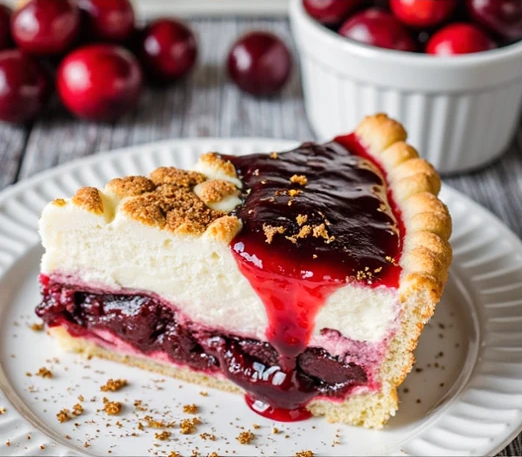
I discovered cranberry custard pie quite by accident several years ago when I was trying to use up fresh cranberries left over from making sauce. I had always been a fan of custard pies—there’s something about that silky, barely-set filling that I find irresistible. That day, looking at my bag of tart cranberries and thinking about my favorite custard pie recipe, inspiration struck. What if I combined them? The result was a revelation: a beautiful pie with layers of ruby-red cranberries suspended in a creamy vanilla custard, all nestled in a buttery crust. It was tart yet sweet, elegant yet comforting—exactly what I’d been craving without knowing it.
Cranberry custard pie is not as well-known as pumpkin or pecan pie, but it deserves a place in the holiday dessert rotation. The combination of tart cranberries and sweet, creamy custard creates a perfect balance that’s both sophisticated and satisfying. This pie looks stunning when sliced, with those vibrant cranberries creating a beautiful contrast against the pale custard. It’s the kind of dessert that makes guests ask for the recipe before they’ve even finished their first bite.
The Appeal of Cranberry Custard Pie
A Perfect Balance of Flavors
What makes cranberry custard pie so special is the interplay between the tart cranberries and the sweet, rich custard. Fresh cranberries are quite sour on their own—too sour for most people to eat plain. But when they’re baked into a sweetened custard, something magical happens. The cranberries soften and burst slightly, releasing their tart juice into the creamy custard. Each bite offers both the tangy pop of cranberry and the smooth sweetness of custard, creating a complex flavor experience that keeps you coming back for more.
The texture is equally appealing. The custard should be barely set, with a slight jiggle in the center when the pie is done—not liquid, but not firm like cheesecake either. The cranberries add little bursts of texture throughout, while the crust provides a buttery, crisp foundation. It’s a study in contrasts that works beautifully.
A Showstopping Holiday Dessert
Beyond the flavor, cranberry custard pie is simply beautiful to look at. The deep red cranberries against the cream-colored custard create a natural holiday color palette that needs no additional decoration. When you cut into the pie, each slice reveals those gorgeous layers of fruit and custard. It’s an elegant dessert that looks like it came from a fancy bakery but is surprisingly simple to make at home.
Essential Ingredients for Cranberry Custard Pie
For the Pie Crust:
- 1 ¼ cups all-purpose flour
- ½ teaspoon salt
- 1 tablespoon sugar
- ½ cup cold unsalted butter, cut into cubes
- 3-4 tablespoons ice water
For the Cranberry Layer:
- 2 cups fresh cranberries (about 8 ounces)
- ¾ cup granulated sugar
- 2 tablespoons all-purpose flour
- Zest of 1 orange (optional but recommended)
For the Custard Filling:
- 3 large eggs
- 1 cup heavy cream
- ½ cup whole milk
- ½ cup granulated sugar
- 1 teaspoon vanilla extract
- ¼ teaspoon salt
- ¼ teaspoon ground cinnamon
- Pinch of nutmeg
Step-by-Step Instructions for Perfect Cranberry Custard Pie
Preparing the Pie Crust
A great cranberry custard pie starts with a perfectly flaky crust. In a large bowl, whisk together the flour, salt, and sugar. Add the cold butter cubes and work them into the flour mixture using a pastry cutter, two forks, or your fingertips until the mixture resembles coarse crumbs with some pea-sized pieces of butter remaining. These larger butter pieces are key to creating a flaky crust.
Drizzle 3 tablespoons of ice water over the mixture and stir with a fork until the dough starts to come together. If it’s still too dry and crumbly, add the remaining tablespoon of water. The dough should hold together when pressed but shouldn’t be wet or sticky.
Turn the dough out onto a piece of plastic wrap, shape it into a disk, wrap it tightly, and refrigerate for at least 30 minutes or up to 2 days. This resting time allows the gluten to relax and the butter to firm up, making the dough easier to roll and creating a more tender crust.
Rolling and Par-Baking the Crust
When you’re ready to assemble your cranberry custard pie, preheat your oven to 375°F (190°C). On a lightly floured surface, roll the chilled dough into a circle about 12 inches in diameter and ⅛ inch thick. Transfer it to a 9-inch pie pan, gently pressing it into the bottom and up the sides. Trim any excess dough, leaving about a ½-inch overhang, then fold this overhang under itself and crimp decoratively.
Line the crust with parchment paper or aluminum foil and fill it with pie weights, dried beans, or rice. This prevents the crust from puffing up during baking. Bake for 15 minutes, then carefully remove the weights and liner. Return the crust to the oven and bake for another 5 minutes until it’s just beginning to turn golden. Remove from the oven and reduce the temperature to 325°F (165°C).
This par-baking step is crucial for cranberry custard pie because it ensures the bottom crust stays crisp even when filled with the custard mixture. Without par-baking, you’d likely end up with a soggy bottom crust.
Preparing the Cranberry Layer
While your crust is cooling slightly, prepare the cranberry layer. Rinse the fresh cranberries and pick through them, discarding any that are soft or damaged. In a medium bowl, toss the cranberries with ¾ cup sugar, 2 tablespoons flour, and the orange zest if using. The flour helps absorb some of the juice released by the cranberries as they bake, preventing the pie from becoming too watery.
Spread the cranberry mixture evenly over the bottom of the par-baked crust. The fruit should form a fairly even single layer, though some overlap is fine. This layer will sink slightly during baking as the custard is poured over it.
Making the Custard Filling
The custard filling for cranberry custard pie is simple but requires attention to detail for the best results. In a large mixing bowl, whisk together the eggs until well beaten. Add the heavy cream, milk, sugar, vanilla extract, salt, cinnamon, and nutmeg. Whisk until the mixture is smooth and the sugar has dissolved. The cinnamon and nutmeg add subtle warmth without overwhelming the cranberry flavor.
Some people prefer to heat the cream mixture slightly before adding it to the eggs, which can help the custard set more evenly. If you choose to do this, warm the cream and milk with the sugar just until the sugar dissolves, let it cool for a few minutes, then whisk it gradually into the beaten eggs. This tempering process prevents the eggs from cooking into scrambled bits.
Assembling and Baking the Cranberry Custard Pie
Place your crust with the cranberry layer on a baking sheet (this makes it easier to move and catches any potential drips). Carefully pour the custard mixture over the cranberries, filling the crust as full as possible without overflowing. You want the custard to just reach the top of the crust.
Transfer the baking sheet with the pie to the preheated 325°F (165°C) oven. Bake for 45-55 minutes, until the custard is mostly set but still has a slight jiggle in the very center when you gently shake the pan. The edges should be set and perhaps slightly puffed, while the center remains just a bit wobbly.
This is the trickiest part of making cranberry custard pie—determining doneness. Underbaked custard will be too loose and liquidy; overbaked custard becomes grainy and can crack. The pie will continue to set as it cools, so it’s better to err on the side of slightly underdone rather than overbaked.
Cooling and Setting
Once your cranberry custard pie is baked to perfection, remove it from the oven and place it on a wire rack. Let it cool to room temperature, which will take about 2 hours. As it cools, the custard will firm up considerably.
After the pie has cooled completely, refrigerate it for at least 2 hours before serving, or preferably overnight. Cranberry custard pie is actually best when it’s had time to chill completely—the flavors meld together, and the custard achieves its ideal texture. The pie should be served cold or at cool room temperature.
Expert Tips for Cranberry Custard Pie Success
Working with Fresh Cranberries
Fresh cranberries are available in most grocery stores from October through December. If you’re making cranberry custard pie outside of this season, frozen cranberries work perfectly well—just don’t thaw them before adding to the pie. Thawed cranberries release too much liquid and can make your pie soggy.
When tossing your cranberries with sugar and flour, don’t skip the flour. It may seem like a small amount, but it plays an important role in absorbing the juice that cranberries release during baking, keeping your custard from becoming watery.
Achieving Perfect Custard Texture
The key to silky, smooth custard in your cranberry custard pie is gentle baking at a moderate temperature. High heat will cause the eggs to curdle, resulting in grainy, unpleasant texture. If you notice the edges of your custard starting to puff up too much or crack, reduce your oven temperature by 25°F.
Whisking the custard thoroughly before baking is also important, but avoid over-whisking, which can incorporate too much air and lead to a foamy texture or cracks on the surface.
Preventing Crust Issues
To ensure your crust stays crisp in cranberry custard pie, make sure to par-bake it properly. If you skip this step or don’t bake it long enough, you’ll end up with a soggy bottom. Additionally, avoid letting the par-baked crust cool completely before adding the filling—adding the custard while the crust is still slightly warm helps create a good seal between the crust and filling.
Nutritional Information for Cranberry Custard Pie
Per slice (recipe makes 8 servings):
- Calories: 395
- Total Fat: 21g
- Saturated Fat: 12g
- Cholesterol: 145mg
- Sodium: 210mg
- Total Carbohydrates: 47g
- Dietary Fiber: 2g
- Sugars: 30g
- Protein: 6g
- Vitamin C: 8% DV
- Calcium: 8% DV
- Iron: 8% DV
Cranberries are rich in antioxidants and vitamin C, making this indulgent dessert slightly more nutritious than many other pies.
Serving and Presentation Ideas for Cranberry Custard Pie
Classic Garnishes
Cranberry custard pie is beautiful enough to serve unadorned, but a few simple garnishes can elevate its presentation. A dollop of freshly whipped cream sweetened with a touch of vanilla is traditional and complements the tart cranberries perfectly. You could also dust the whipped cream lightly with cinnamon or grate some fresh nutmeg over the top.
For a more elegant presentation, pipe whipped cream rosettes around the edge of each slice using a star tip. A few sugared cranberries (whole cranberries rolled in beaten egg white, then granulated sugar, and dried) make stunning decorative elements.
Plating Techniques
When serving cranberry custard pie, use a sharp knife dipped in hot water and wiped clean between cuts to achieve clean slices. Wipe the knife after each cut to prevent the cranberry filling from making subsequent slices look messy.
For an especially elegant presentation, place each slice on a white or cream-colored plate, add a quenelle of whipped cream to one side, and garnish with a fresh mint sprig or a few fresh cranberries. The red berries against the white plate create a beautiful holiday color scheme.
Pairing Suggestions for Cranberry Custard Pie
Beverage Pairings
The tart-sweet profile of cranberry custard pie pairs beautifully with a range of beverages. For wine lovers, a late-harvest Riesling or ice wine complements the cranberries without overwhelming them. The residual sweetness in these wines balances the tartness while their acidity cuts through the richness of the custard.
For a non-alcoholic option, serve your cranberry custard pie with strong black tea—Earl Grey or English Breakfast both work wonderfully. The tannins in the tea cleanse the palate between bites. Sparkling cider also makes an excellent pairing, with its effervescence and fruit notes enhancing the cranberry flavor.
Complementary Desserts
If you’re serving cranberry custard pie as part of a larger dessert spread, it pairs well with less sweet, more textural desserts. Consider serving it alongside crisp cookies like biscotti or shortbread, which provide a nice contrast to the creamy pie. Pecan tassies or small mince pies also complement it well, offering different but compatible holiday flavors.
Variations on Classic Cranberry Custard Pie
Cranberry-Orange Custard Pie
For a brighter, more citrus-forward version, increase the orange zest to 2 tablespoons and add 2 tablespoons of fresh orange juice to the custard mixture (reduce the milk by 2 tablespoons to compensate). The orange amplifies the cranberry flavor and adds complexity.
Cranberry-Almond Custard Pie
Replace ½ teaspoon of the vanilla extract with ½ teaspoon of almond extract in the custard. Sprinkle ¼ cup of sliced almonds over the cranberries before adding the custard. This variation adds lovely nutty notes and a bit of textural interest.
Individual Cranberry Custard Tarts
Instead of making one large pie, divide the crust dough into 6-8 portions and press them into individual tart pans. Reduce the baking time to 25-30 minutes. These individual portions are perfect for dinner parties and eliminate the need for slicing.
Cranberry-Pear Custard Pie
Add one ripe but firm pear, peeled and thinly sliced, to the cranberry layer. The pear adds sweetness and another dimension of flavor while complementing the cranberries beautifully. This variation is especially good if you find straight cranberry too tart.
Storage and Make-Ahead Tips for Cranberry Custard Pie
Proper Storage
Cranberry custard pie must be stored in the refrigerator due to its dairy-based custard filling. Cover the cooled pie loosely with plastic wrap or aluminum foil and refrigerate for up to 3 days. The pie actually improves after a day in the fridge as the flavors meld together.
Freezing Considerations
While you can freeze cranberry custard pie, I generally don’t recommend it. Custard pies don’t freeze as well as fruit pies—the texture of the custard can become grainy when thawed, and the crust may become soggy. If you must freeze it, wrap it very well in plastic wrap and then aluminum foil. Freeze for up to 1 month and thaw overnight in the refrigerator before serving.
Make-Ahead Strategy
You can prepare components of cranberry custard pie in advance to ease holiday stress. The pie crust dough can be made up to 3 days ahead and kept refrigerated, or frozen for up to 3 months. The par-baked crust can be prepared a day ahead. The fully assembled pie is best baked no more than 1 day before serving for optimal texture and freshness.
Troubleshooting Common Cranberry Custard Pie Problems
Weepy or Watery Pie
If your cranberry custard pie releases a lot of liquid or seems watery, the cranberries likely released too much juice. Make sure you’re tossing them with flour before adding to the crust. Also, don’t use frozen cranberries that have been thawed—use them frozen, or use fresh cranberries.
Cracked Custard Surface
Cracks in the custard surface are usually caused by overbaking or baking at too high a temperature. Remember that the pie continues to set as it cools, so remove it from the oven when the center still has a slight jiggle. If your oven runs hot, reduce the temperature by 25°F.
Soggy Bottom Crust
A soggy bottom crust in cranberry custard pie is almost always the result of inadequate par-baking. Make sure you bake the crust until it’s just beginning to turn golden before adding the filling. Using a ceramic or glass pie dish rather than metal can also help, as these materials conduct heat more evenly.
My Personal Cooking Tip
The most important lesson I’ve learned from years of making cranberry custard pie is this: trust the wobble. When that pie comes out of the oven with the center still slightly jiggly, it might look underdone. Every instinct might tell you to put it back in the oven for “just five more minutes.” Resist that urge. The residual heat will continue to cook the custard as it cools, and what seems too loose when hot will be perfectly set when cold.
I’ve overbaked more custard pies than I care to admit because I didn’t trust this process. Each time, I’d end up with a pie that was grainy instead of silky, with cracks across the surface. Now I know that perfect custard requires faith—faith that the chemistry will work, that the residual heat will do its job, and that sometimes the best action is no action at all.
Cranberry custard pie rewards patience and gentle handling. It’s not a dessert you can rush or force. But when you get it right—when you pull that pie from the oven at just the right moment, when you let it cool properly, when you chill it completely before slicing—the result is absolutely worth the wait. That first bite, with its perfect balance of tart cranberries and silky custard, makes all the careful attention worthwhile.