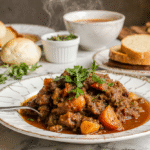
Description
Hobo casserole ground beef belongs to a category of recipes that emerged during times when home cooks needed to stretch ingredients and feed families economically. The name likely comes from “hobo dinners” – foil-wrapped packets of meat, potatoes, and vegetables cooked over campfires during the Great Depression era. While the exact origins are murky, the recipe has been passed down through generations of American families, each adding their own twist while maintaining the essential elements that make it special.
What makes this casserole enduringly popular is its perfect combination of practicality and satisfaction. You’re working with affordable, accessible ingredients – ground beef, potatoes, canned soup, cheese – that most families already have on hand. Yet the result tastes like comfort food luxury, with layers of flavors and textures that please even picky eaters.
The genius of hobo casserole lies in its simplicity. You’re essentially layering ingredients in a baking dish and letting the oven work its magic. As it bakes, the potatoes become tender and absorb the flavors from the seasoned beef and creamy sauce, the cheese melts into golden bubbling perfection, and your kitchen fills with an aroma that brings everyone running to the table. It’s the kind of dish that makes a house feel like a home.
Ingredients
Essential Ingredients for Hobo Casserole
Creating this classic hobo casserole ground beef requires straightforward ingredients that deliver maximum comfort with minimum fuss.
For the Casserole:
- 1½ pounds lean ground beef
- 1 medium onion, diced
- 3 cloves garlic, minced
- 5–6 large russet potatoes (about 3 pounds)
- 1 can (10.5 oz) condensed cream of mushroom soup
- 1 can (10.5 oz) condensed cream of chicken soup
- 1 cup evaporated milk (or whole milk)
- 2 cups shredded cheddar cheese, divided
- 2 tablespoons Worcestershire sauce
- 1 teaspoon onion powder
- 1 teaspoon garlic powder
- 1 teaspoon salt
- ½ teaspoon black pepper
- 1 cup French fried onions (for topping)
- Fresh parsley, chopped (for garnish)
Optional Add-ins:
- 1 cup frozen corn or peas
- 1 green bell pepper, diced
- 1 cup sliced mushrooms
- 1 cup shredded carrots
The ground beef should be lean (90/10 or 85/15) to prevent the casserole from becoming greasy. If you use fattier beef, be sure to drain it thoroughly after browning. The combination of cream of mushroom and cream of chicken soups creates the signature creamy binding sauce, though you can use both of one kind if that’s what you have.
Potatoes are the backbone of this dish. Russet potatoes work best because their starchy texture becomes tender and creamy when baked. Slice them thin and uniform – about ⅛ inch thick – for even cooking. A mandoline makes this task quick and easy, but a sharp knife works perfectly well with a little patience.
The evaporated milk isn’t just convenient – it actually makes a richer, creamier sauce than regular milk without the heaviness of cream. If you don’t have it, whole milk works fine, though the sauce will be slightly thinner.
Instructions
Step-by-Step Instructions for Perfect Hobo Casserole
Follow these detailed steps to create a hobo casserole that would make any grandmother proud.
Step 1: Prepare and Preheat
Preheat your oven to 375°F. Spray a 9×13 inch baking dish thoroughly with cooking spray, or butter it generously. This prevents sticking and makes cleanup easier. Trust me, dealing with stuck-on cheese and potato starch is not fun.
Fill a large bowl with cold water. As you slice your potatoes, place them immediately into the water. This prevents oxidation (browning) and helps remove excess starch, which could make the casserole gummy. You want tender, distinct potato layers, not a gluey mass.
Step 2: Brown the Beef
Heat a large skillet over medium-high heat. Add the ground beef, breaking it apart with a wooden spoon or spatula as it cooks. Cook for 5-7 minutes until the beef is thoroughly browned and no pink remains. The beef should be crumbly, not clumped together.
Add the diced onion to the beef and cook for another 3-4 minutes until the onion softens and becomes translucent. Add the minced garlic and cook for one more minute until fragrant. Season generously with salt, pepper, onion powder, and garlic powder. The beef should be well-seasoned at this stage, as it’s one of the main flavor components.
Drain the beef mixture well in a colander, pressing gently to remove excess fat without squeezing out the flavorful juices. Return to the pan and set aside.
Step 3: Prepare the Creamy Sauce
In a medium mixing bowl, combine the cream of mushroom soup, cream of chicken soup, evaporated milk, and Worcestershire sauce. Whisk until completely smooth with no lumps. The Worcestershire sauce adds savory depth and a subtle tang that elevates the entire dish.
Taste the sauce and season if needed. Remember that the condensed soups are already salted, so you might not need additional salt. The sauce should coat the back of a spoon – if it seems too thick, thin it with a splash more milk.
Step 4: Begin Layering
Drain the potato slices and pat them dry with clean kitchen towels. Moisture on the potatoes can make your casserole watery.
Create your first layer: arrange half of the potato slices in overlapping rows across the bottom of your prepared baking dish. Season this layer lightly with salt and pepper. The seasoning should be applied to each layer for even flavor distribution throughout the casserole.
Step 5: Add Beef and Sauce
Spread all of the cooked ground beef mixture evenly over the potato layer. Press it down gently to create an even surface. If you’re adding optional vegetables like corn or peas, mix them into the beef layer now.
Pour half of the creamy sauce mixture over the beef, spreading it with the back of a spoon to ensure even coverage. The sauce will flow down through the layers as it bakes, but you want good initial distribution.
Step 6: Final Layers
Sprinkle 1 cup of the shredded cheddar cheese over the sauce. Arrange the remaining potato slices over the cheese, again in overlapping rows. Season this top potato layer with salt and pepper.
Pour the remaining sauce over the top potato layer, spreading carefully to cover all the potatoes. Any exposed potato will brown and become crispy, which some people love, but covering everything ensures even cooking and prevents dry spots.
Step 7: Cover and Bake
Cover the baking dish tightly with aluminum foil. Make sure the foil doesn’t touch the top layer – tent it slightly if needed. The foil traps steam, which helps cook the potatoes through.
Place the covered casserole on the middle rack of your preheated oven. Set a baking sheet on the rack below to catch any drips or overflow. Bake for 1 hour and 15 minutes. The potatoes should be fork-tender when you test them through the foil.
Step 8: Add Toppings
After the initial baking time, carefully remove the casserole from the oven and remove the foil. Sprinkle the remaining 1 cup of cheddar cheese evenly over the top. Scatter the French fried onions over the cheese – these add an irresistible crunch and savory flavor.
Return the uncovered casserole to the oven for 10-15 minutes until the cheese is melted and bubbly and the fried onions are golden brown. The top should look gloriously appetizing with patches of golden cheese and crispy onions.
Step 9: Rest and Serve
Remove from the oven and let the casserole rest for 10-15 minutes before serving. This resting time is crucial – it allows the sauce to thicken and the layers to set. If you cut into it immediately, it will be soupy and fall apart. After resting, it will slice into neat portions that hold together on the plate.
Garnish with freshly chopped parsley for a pop of color and fresh flavor. Serve hot and watch it disappear!
Pro Tips for Hobo Casserole Success
After years of making this recipe, I’ve learned several tricks that guarantee success every time. First, uniform potato slices are crucial for even cooking. Too thick and they won’t cook through; too thin and they’ll dissolve into mush. Aim for consistent ⅛-inch thickness.
If you’re worried about your potatoes being undercooked, parboil them for 5 minutes before assembling the casserole. This ensures they’ll be perfectly tender without requiring extended baking time. Just be sure to drain them thoroughly and let them steam-dry before layering.
For extra flavor, season each layer individually rather than just the meat. A light sprinkle of salt and pepper on each potato layer makes a huge difference in the final result. You’re building flavor throughout the dish, not just on top.
Make sure your beef is thoroughly drained. Excess grease will create an unpleasant oily layer on top of your casserole and make it less enjoyable. Press the cooked beef with paper towels if needed to remove lingering fat.
Nutritional Information
Per serving (based on 8 servings):
Calories: 485
Protein: 28g
Fat: 24g
Saturated Fat: 12g
Carbohydrates: 38g
Fiber: 3g
Sugar: 4g
Cholesterol: 85mg
Sodium: 890mg
This hobo casserole provides substantial protein and is quite filling, making it a complete meal. While it’s comfort food that’s not exactly diet food, it’s not as heavy as you might think. You’re getting protein, carbohydrates, and even some vegetables if you add them, creating a fairly balanced meal.
Variations and Customizations
The beauty of hobo casserole is how easily it adapts to different tastes and dietary needs. For a lighter version, use ground turkey or chicken instead of beef. Season it a bit more aggressively, as these leaner meats have less inherent flavor than beef.
Southwestern hobo casserole is a delicious variation: add taco seasoning to the beef, use Mexican cheese blend, add black beans and corn, and top with crushed tortilla chips instead of fried onions. Serve with sour cream and salsa.
For a “loaded baked potato” version, add crumbled bacon to the beef layer, use sour cream in the sauce mixture, and top with extra cheese and chives. It’s everything you love about loaded baked potatoes in casserole form.
Vegetarian hobo casserole works well too. Replace the beef with a mixture of mushrooms, lentils, and walnuts for meaty texture and umami flavor. Use cream of mushroom soup and vegetable broth in the sauce.
Make-Ahead and Storage
Hobo casserole is ideal for make-ahead meals. Assemble the entire casserole up to 24 hours before baking. Cover tightly and refrigerate. When ready to bake, let it sit at room temperature for 30 minutes, then bake as directed, adding an extra 10-15 minutes to the covered baking time since you’re starting from cold.
Leftovers store beautifully in the refrigerator for up to 5 days. Cover individual portions and reheat in the microwave, or reheat the entire casserole covered in a 350°F oven for 20-25 minutes until warmed through.
You can freeze hobo casserole either before or after baking. Before baking: assemble completely, cover tightly with plastic wrap and then foil, and freeze for up to 3 months. Thaw overnight in the refrigerator before baking. After baking: cool completely, cover tightly, and freeze for up to 3 months. Thaw in the refrigerator and reheat.
Serving Suggestions
While hobo casserole is hearty enough to stand alone, certain sides complement it beautifully. A simple green salad with a tangy vinaigrette cuts through the richness and adds freshness. Steamed green beans or broccoli provides color and nutrition without competing with the casserole’s comforting flavors.
Dinner rolls or crusty bread are perfect for soaking up any sauce. Cornbread is another excellent choice, especially with the Southwestern variation. For a lighter option, serve with coleslaw – the crisp, tangy slaw provides textural contrast.