Description
Despite the name, Mongolian beef isn’t actually from Mongolia—it’s an American-Chinese creation that’s become a beloved staple in Chinese restaurants across the United States. The dish is characterized by its sweet and savory sauce, typically featuring soy sauce, brown sugar, and ginger, with tender beef and aromatic scallions.
My mongolian ground beef noodles recipe takes this classic and transforms it into a one-pot wonder. Using ground beef instead of sliced flank steak makes it more economical and faster to cook—perfect for those hectic weeknights when you need dinner on the table in 20 minutes. The addition of noodles makes it a complete meal that’s hearty, satisfying, and kid-friendly.
Ingredients
Ingredients for Mongolian Ground Beef Noodles
Beef:
- 1.5 pounds ground beef (80/20 or 85/15 for best flavor)
- 2 tablespoons vegetable oil
- 6 cloves garlic, minced
- 2 tablespoons fresh ginger, minced (or 1 tablespoon ground ginger)
- ½ teaspoon red pepper flakes (adjust to taste)
Sauce:
- ½ cup low-sodium soy sauce
- ½ cup water
- ⅓ cup brown sugar (light or dark)
- 2 tablespoons hoisin sauce
- 1 tablespoon rice vinegar
- 1 tablespoon sesame oil
- 2 teaspoons cornstarch mixed with 2 tablespoons cold water
Noodles:
- 12 ounces Asian noodles (lo mein, udon, or rice noodles)
- Salt for noodle water
For Vegetables and Garnish:
- 1 red bell pepper, thinly sliced (optional)
- 4 green onions, cut into 2-inch pieces
- 2 green onions, thinly sliced for garnish
- Fresh cilantro for garnish
- Sesame seeds for garnish
Instructions
Comprehensive Step-by-Step Instructions
Preparing Your Ingredients (Mise en Place)
The key to making this mongolian ground beef noodles recipe quickly is having everything ready before you start cooking. This is called mise en place, and it’s essential for stir-fry style dishes that cook fast.
Start by mincing your garlic and ginger. For the ginger, I peel it with a spoon (it’s easier than a peeler and wastes less), then mince it finely. Fresh ginger makes a huge difference in this dish—the bright, spicy-sweet flavor can’t be replicated with ground ginger, though that works in a pinch.
Mix your sauce ingredients together in a bowl: soy sauce, water, brown sugar, hoisin sauce, rice vinegar, and sesame oil. Stir until the brown sugar dissolves. In a separate small bowl, mix the cornstarch with cold water to create a slurry—this will thicken your sauce later.
Cut your green onions into 2-inch pieces. If using bell pepper, slice it thinly. Have everything within arm’s reach of your stove.
Cooking the Noodles
Bring a large pot of water to a boil. Add a pinch of salt (not too much since the sauce is salty). Add your noodles and cook according to package directions until just al dente—usually 4-6 minutes for fresh noodles, 8-10 for dried.
The type of noodle you choose matters. Lo mein noodles are traditional and have a wonderful chewy texture. Udon noodles are thicker and even chewier—they hold up beautifully to the sauce. Rice noodles are a great gluten-free option. Even spaghetti works in a pinch!
Before draining, scoop out and reserve about 1 cup of the noodle cooking water. Drain the noodles and toss them with a tiny drizzle of sesame oil to prevent sticking. Set aside.
Browning the Ground Beef
Heat a large wok or deep skillet over high heat. Add the vegetable oil and swirl to coat the pan. When the oil is shimmering (very hot but not smoking), add the ground beef.
Here’s the key: let it sit undisturbed for 2-3 minutes. Resist the urge to stir! You want to develop a deep brown crust on the bottom. This caramelization is where the flavor comes from. After those initial minutes, break the beef apart with a spatula or wooden spoon and continue cooking, stirring occasionally, until it’s fully browned and no pink remains—about 5-7 minutes total.
If there’s excess fat in the pan (more than about 2 tablespoons), drain it off. A little fat is good for flavor, but too much will make your dish greasy.
Building the Flavor Base
Push the browned beef to the sides of the pan, creating a well in the center. Add the minced garlic, ginger, and red pepper flakes to this empty space. Stir them around in the hot pan for about 30 seconds to 1 minute until incredibly fragrant. You’ll know it’s ready when the aroma hits you—it should smell amazing.
This technique of blooming the aromatics separately ensures they don’t burn but still release all their flavors into the oil. Once they’re fragrant, stir them into the beef, coating everything evenly.
Creating the Mongolian Sauce
Pour the sauce mixture over the beef and aromatics. It will sizzle and steam—this is good! Bring the mixture to a boil, then reduce the heat slightly and let it simmer for about 2-3 minutes. The sauce will start to reduce and concentrate in flavor.
Give your cornstarch slurry a quick stir (it separates as it sits), then pour it into the simmering sauce. Stir constantly as you add it. Within 30 seconds to 1 minute, you’ll see the sauce thicken dramatically and become glossy. It should coat the back of a spoon and cling to the beef.
If the sauce seems too thick, thin it with a splash of the reserved noodle water. If it’s too thin, let it simmer another minute or two to reduce further.
Bringing It All Together
Add the 2-inch pieces of green onion to the beef and sauce. Stir them in and let them cook for just 1-2 minutes—you want them to soften slightly but still have some bite and bright color. If using bell peppers, add them now too.
Add the cooked noodles to the pan and toss everything together using tongs or two spatulas. Make sure every strand of noodle is coated in that gorgeous, glossy mongolian sauce. The noodles should be completely integrated with the beef, not sitting separately.
Toss for 2-3 minutes until everything is heated through and well combined. Taste and adjust seasonings if needed—sometimes I add a splash more soy sauce or a pinch of sugar depending on how the flavors balance.
Visual Description of the Dish
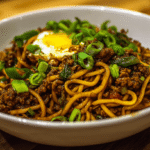
These mongolian ground beef noodles are visually stunning in their simplicity. The glossy, dark brown sauce coats each golden noodle strand, creating an appetizing sheen. Bits of browned ground beef are distributed throughout, along with vibrant green pieces of scallion and occasional strips of red bell pepper that add pops of color. The sauce pools slightly at the bottom of the bowl, thick and syrupy-looking. Garnished with thinly sliced fresh green onions, cilantro leaves, and a generous sprinkle of toasted sesame seeds, the dish looks both rustic and restaurant-worthy. Served in a white bowl, the dark sauce and golden noodles create beautiful contrast, and wisps of steam rising from the hot noodles make it look absolutely irresistible.
Nutritional Profile
This mongolian ground beef noodles recipe provides a substantial, well-balanced meal. Each serving (approximately 2 cups) contains:
Calories: 520-560
Protein: 32g
Carbohydrates: 58g
Fat: 18g
Fiber: 3g
Sugar: 14g
Sodium: 980mg
Iron: 20% DV
Vitamin C: 15% DV
The ground beef provides high-quality protein and iron, essential for energy and muscle health. The noodles offer energy-providing carbohydrates. The sauce, while containing sugar, is packed with flavor compounds from the garlic, ginger, and fermented soy products that offer various health benefits.
For a lighter version, you can use ground turkey or chicken instead of beef, reduce the brown sugar by half, and add more vegetables like broccoli, snow peas, or carrots. Using whole wheat noodles or zucchini noodles can increase fiber content and reduce calories.
Presentation and Serving Ideas
The presentation of these mongolian ground beef noodles can range from casual to elegant:
Casual Family Style: Serve in a large, shallow bowl or platter in the center of the table. Let everyone help themselves, with small bowls of additional toppings (extra scallions, sesame seeds, sriracha, cilantro) on the side for customization.
Individual Bowls: Portion the noodles into individual serving bowls. Use tongs or chopsticks to twirl the noodles into a neat nest, then top with a portion of the beef and sauce. Garnish each bowl individually with scallions, cilantro, and sesame seeds. Add a pair of chopsticks for authentic presentation.
Bento-Style: Pack in compartmented containers for lunch. Keep some raw vegetables (cucumber slices, carrot sticks) in a separate compartment for crunch and freshness.
Perfect Pairings and Accompaniments
While these mongolian ground beef noodles are a complete meal on their own, certain accompaniments enhance the experience:
Vegetable Sides: Steamed or stir-fried bok choy, Chinese broccoli (gai lan), or green beans complement the richness of the noodles. A simple cucumber salad with rice vinegar dressing adds refreshing crunch.
Appetizers: Spring rolls, pot stickers, or crab rangoon make this feel like a complete Chinese restaurant experience at home. Wonton soup is a lighter starter option.
Beverages: Green tea (hot or iced) is traditional and helps cut through the richness. For beer lovers, a light lager or wheat beer works well. Wine pairing is tricky with the sweetness, but an off-dry Riesling can work beautifully.
Recipe Variations and Substitutions
This mongolian ground beef noodles recipe is wonderfully adaptable. Here are variations I’ve enjoyed:
Protein Variations: Ground turkey or chicken work well—cook them the same way but add a tablespoon of oil since they’re leaner. For a vegetarian version, use crumbled firm tofu or tempeh. Thinly sliced flank steak makes it more traditional (marinate in soy sauce and cornstarch first).
Vegetable-Loaded Version: Add broccoli florets, snap peas, mushrooms, or shredded cabbage. Add harder vegetables earlier in the cooking process, softer ones at the end.
Spicy Mongolian Noodles: Increase red pepper flakes, add sambal oelek or sriracha to the sauce, or garnish with fresh sliced chilies.
Low-Carb Version: Replace noodles with zucchini noodles, shirataki noodles, or cauliflower rice. Reduce the sugar in the sauce by half.
Meal Prep Version: Make a large batch of the beef in sauce without noodles. Store separately, then cook fresh noodles each time you want to serve it. This keeps the noodles from getting soggy.