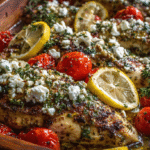
Description
Greek cooking relies heavily on a specific combination of ingredients that have been perfected over centuries. In this chicken recipe, we’re using the foundation of Mediterranean cooking: extra virgin olive oil, fresh lemon, garlic, and dried oregano. These four ingredients alone can transform any dish, but when you add the briny kick of feta cheese and the subtle licorice notes of fresh dill or parsley for garnish, you create something truly memorable.
What makes this recipe particularly special is the way these flavors complement rather than compete with each other. The lemon brightens the rich chicken, the oregano adds earthiness, the garlic provides depth, and the feta brings a creamy, tangy element that ties everything together. It’s a masterclass in balance, and once you understand this flavor profile, you’ll find yourself applying it to other proteins and vegetables too.
Ingredients
Ingredients You’ll Need for Greek Chicken
For the Marinade and Chicken
- 4 boneless, skinless chicken breasts (about 6–8 oz each)
- 1/3 cup extra virgin olive oil
- 1/4 cup fresh lemon juice (about 2 lemons)
- 1 tablespoon red wine vinegar
- 4 cloves garlic, minced
- 2 tablespoons dried oregano
- 1 teaspoon dried thyme
- 1 teaspoon paprika (optional, for color)
- 1 teaspoon salt
- 1/2 teaspoon black pepper
- 1/2 teaspoon red pepper flakes (optional, for heat)
For Serving and Garnish
- 1 lemon, thinly sliced
- 1/2 cup crumbled feta cheese
- 2 tablespoons fresh dill or parsley, chopped
- Cherry tomatoes, halved (optional)
- Cucumber slices (optional)
- Extra virgin olive oil for drizzling
The beauty of this Greek chicken recipe is that the ingredient list is straightforward, yet the results are anything but ordinary. I always use the best quality olive oil I can afford – it really does make a difference in the final flavor. Similarly, fresh lemon juice is non-negotiable; bottled just doesn’t have the same brightness and complexity.
Instructions
Step-by-Step Instructions for Perfect Greek Chicken
Preparing the Marinade for Greek Chicken
Start by preparing your marinade in a medium bowl. I like to whisk together the olive oil, lemon juice, and red wine vinegar first to create an emulsion. Then add your minced garlic – and please, use fresh garlic cloves rather than the pre-minced stuff in a jar. The flavor difference is significant. Add the dried oregano, thyme, paprika if using, salt, pepper, and red pepper flakes.
Whisk everything together until well combined. The mixture should smell absolutely divine – bright, herbaceous, and inviting. This is when I usually taste a tiny bit on my finger to check the seasoning balance. It should be tangy, garlicky, and well-seasoned.
Marinating Your Chicken Breasts
Place your chicken breasts in a large zip-top bag or a shallow dish. If your chicken breasts are particularly thick (more than 1 inch), I recommend pounding them to an even thickness. This ensures they cook evenly and absorb the marinade uniformly. Pour the marinade over the chicken, making sure each piece is well coated.
Seal the bag or cover the dish with plastic wrap and refrigerate for at least 2 hours, or preferably overnight. I like to flip the bag or turn the chicken pieces halfway through the marinating time to ensure every part gets equal exposure to those wonderful flavors. The longer you marinate (up to 24 hours), the more flavorful and tender your Greek chicken will be.
Cooking Your Greek Chicken to Perfection
When you’re ready to cook, remove the chicken from the refrigerator about 20-30 minutes before cooking to bring it closer to room temperature. This helps it cook more evenly. Preheat your oven to 400°F (200°C) if you’re baking, or heat a large oven-safe skillet over medium-high heat if you’re going the stovetop-to-oven route.
I prefer the skillet method because it gives you that beautiful sear first. Heat a tablespoon of olive oil in your skillet, then add the chicken breasts, shaking off excess marinade (but don’t discard it!). Sear for 3-4 minutes on each side until you get a gorgeous golden-brown crust. This step is crucial for developing flavor through the Maillard reaction.
Once both sides are nicely browned, arrange your lemon slices over and around the chicken. Pour any remaining marinade into the pan (it’s safe because it’s about to be cooked at high heat), then transfer the entire skillet to your preheated oven. Bake for 15-20 minutes, or until the internal temperature reaches 165°F (74°C) when measured with a meat thermometer at the thickest part of the breast.
The Final Touch: Feta and Fresh Herbs
Once your Greek chicken is cooked through, remove it from the oven and immediately sprinkle the crumbled feta cheese over the top. The residual heat will slightly melt the cheese, creating this wonderful creamy texture that contrasts beautifully with the crispy exterior of the chicken. Let the chicken rest for 5 minutes – this is important as it allows the juices to redistribute throughout the meat.
Just before serving, garnish with freshly chopped dill or parsley, and drizzle with a little extra virgin olive oil. The fresh herbs add a pop of color and a final layer of freshness that brightens the entire dish.
Nutritional Information for Greek Chicken
Per serving (1 chicken breast with toppings):
Calories: 385
Protein: 42g
Carbohydrates: 4g
Fat: 22g
Saturated Fat: 5g
Fiber: 1g
Sugar: 1g
Sodium: 720mg
Potassium: 580mg
Vitamin C: 15% DV
Calcium: 12% DV
Iron: 8% DV
This Greek chicken recipe is naturally low in carbohydrates and high in protein, making it an excellent choice for various dietary approaches including keto, low-carb, and Mediterranean diets. The healthy fats from olive oil and the complete protein from chicken make this a well-balanced, satisfying meal.
Presentation Tips for Your Greek Chicken
Plating Like a Pro
When I serve this Greek chicken for guests, presentation matters. I start with a large white platter – the neutral background really makes the golden chicken and vibrant garnishes pop. Arrange the chicken breasts in a slightly overlapping pattern, with the lemon slices visible on top. Scatter the crumbled feta artistically rather than just dumping it on top.
Add your cucumber slices and cherry tomatoes around the edges of the platter, creating a colorful border. A final drizzle of good olive oil in a zigzag pattern adds professional polish, and don’t forget those fresh herbs scattered over everything. I sometimes add a few Kalamata olives for extra Greek authenticity and visual interest.
Serving Suggestions for Greek Chicken
This crazy juicy Greek chicken pairs beautifully with so many sides. My personal favorite is serving it over a bed of fluffy lemon rice or Greek-style orzo. The grains soak up all the delicious pan juices, and every bite is packed with flavor. Alternatively, a simple Greek salad with tomatoes, cucumbers, red onion, and feta creates a complete meal that’s fresh and satisfying.
For a lower-carb option, I love serving this chicken with roasted vegetables – zucchini, bell peppers, and red onions tossed in olive oil and oregano make perfect companions. Tzatziki sauce on the side is always a hit; that cool, creamy cucumber-yogurt sauce complements the warm, herb-crusted chicken perfectly.
Wine Pairing Suggestions for Greek Chicken
White Wine Pairings
The bright, lemony flavors in this Greek chicken recipe call for a crisp white wine that can match its acidity. My top choice is a Greek Assyrtiko from Santorini – it’s like bringing the recipe full circle with an authentic Greek wine. The wine’s citrus notes and mineral character complement the lemon and herbs beautifully.
If Greek wine isn’t available, a Sauvignon Blanc from New Zealand or a Vermentino from Italy works wonderfully. Both have the acidity and herbaceous qualities that harmonize with the oregano and garlic in the dish.
Rosé and Light Red Options
For those who prefer rosé, a dry Provençal rosé is lovely with Greek chicken. Its delicate fruit flavors and refreshing acidity make it versatile enough for the chicken while being substantial enough to stand up to the feta cheese.
If you’re a red wine lover, don’t worry – this dish can work with lighter reds too. A Pinot Noir or a Greek Xinomavro offers enough body to complement the chicken without overwhelming the delicate herb flavors. Serve these slightly chilled for the best experience.
Recipe Variations and Substitutions
Protein Alternatives to Chicken Breasts
While I’ve written this recipe for chicken breasts, it’s incredibly versatile. Bone-in, skin-on chicken thighs work beautifully and are even more forgiving if you accidentally overcook them – they stay moist and tender. Just adjust your cooking time to about 35-40 minutes in the oven.
You can also use this marinade for chicken drumsticks, whole chicken legs, or even a spatchcocked whole chicken. I’ve even tried it with pork chops and white fish like cod or halibut with excellent results. The marinade is truly that adaptable.
Herb Variations for Greek Chicken
While oregano is the star herb in traditional Greek cooking, you can play with the herb profile. Fresh oregano is wonderful if you can find it – use about double the amount of dried. I sometimes add fresh rosemary sprigs to the pan while cooking for an aromatic twist.
Mint is another herb that’s very Greek and pairs surprisingly well with lemon and chicken. Just add a tablespoon of chopped fresh mint to your marinade or as a garnish. If you’re not a fan of dill, fresh parsley or even cilantro (though less traditional) works well as a finishing herb.
Dairy-Free Greek Chicken Option
For those avoiding dairy, simply omit the feta cheese. The chicken is still incredibly flavorful without it. To add some richness, you might drizzle the finished dish with tahini thinned with lemon juice, or serve it with a dairy-free tzatziki made from coconut yogurt.
Alternatively, nutritional yeast can provide a savory, slightly cheesy flavor without actual cheese. It’s not the same as feta, but it adds its own interesting dimension to the dish.