Description
The Mediterranean Magic Behind Greek Chicken Bowls
The secret to authentic Greek chicken bowls starts with the marinade. Greek cuisine relies heavily on a few key ingredients—extra virgin olive oil, lemon, garlic, and dried oregano—to create that distinctive Mediterranean flavor. When these ingredients combine with chicken and have time to meld, they create something magical. The acid in the lemon tenderizes the meat while infusing it with bright flavor, the olive oil keeps it juicy, and the oregano provides that unmistakably Greek herbal note.
The vegetables in a Greek bowl aren’t just afterthoughts—they’re essential flavor and texture components. Fresh, crisp cucumbers provide cool crunch. Tomatoes add juicy sweetness. Red onions contribute sharp bite. Kalamata olives bring briny depth. And the feta cheese—tangy, salty, creamy—ties everything together. Each element has a purpose, creating layers of flavor that keep every bite interesting.
Ingredients
Essential Ingredients for Greek Chicken Bowls
To create authentic, restaurant-quality Mediterranean chicken bowls, gather these ingredients:
For the Greek Chicken:
- 2 pounds boneless, skinless chicken breasts or thighs
- ⅓ cup extra virgin olive oil
- ¼ cup fresh lemon juice (about 2 lemons)
- 4 cloves garlic, minced
- 2 tablespoons red wine vinegar
- 1 tablespoon dried oregano
- 1 teaspoon dried thyme
- 1 teaspoon paprika
- ½ teaspoon ground cumin
- 1 teaspoon salt
- ½ teaspoon black pepper
- 1 teaspoon lemon zest
For the Bowl Components:
- 3 cups cooked rice, quinoa, or orzo (or cauliflower rice for low-carb)
- 2 cups cherry tomatoes, halved
- 2 English cucumbers, diced
- 1 red onion, thinly sliced
- 1 cup Kalamata olives, pitted
- 1½ cups crumbled feta cheese
- Fresh parsley, chopped for garnish
- Lemon wedges for serving
For the Tzatziki Sauce:
- 1 cup Greek yogurt (full-fat for creamiest texture)
- 1 English cucumber, grated and squeezed dry
- 2 cloves garlic, minced
- 2 tablespoons fresh lemon juice
- 1 tablespoon extra virgin olive oil
- 1 tablespoon fresh dill, chopped
- Salt and pepper to taste
The quality of your ingredients significantly impacts these Greek chicken bowls. Use authentic Greek extra virgin olive oil if possible—its fruity, peppery flavor is distinctive. Real feta cheese (made from sheep’s or goat’s milk) has a tangy, creamy quality that domestic “feta-style” cheese cannot replicate. Kalamata olives, with their wine-soaked richness, are essential to achieving authentic flavor.
Instructions
Step-by-Step Guide to Perfect Greek Chicken Bowls
Marinating the Chicken
In a large bowl or resealable plastic bag, combine the olive oil, lemon juice, minced garlic, red wine vinegar, oregano, thyme, paprika, cumin, salt, pepper, and lemon zest. Whisk or shake until well combined. Add the chicken, ensuring each piece is thoroughly coated with marinade.
Ideally, marinate the chicken for at least 2 hours, but preferably 4-6 hours or even overnight in the refrigerator. This extended marination time allows the flavors to penetrate deeply and the acid to tenderize the meat. If you’re really pressed for time, even 30 minutes will provide some flavor, though longer is always better for these Mediterranean chicken bowls.
Making the Tzatziki Sauce
While the chicken marinates, prepare your tzatziki. Grate the cucumber using a box grater, then place the shreds in a clean kitchen towel or cheesecloth and squeeze firmly over the sink to remove as much liquid as possible. This step is crucial—excess cucumber water will make your tzatziki watery and dilute the flavors.
In a medium bowl, combine the squeezed cucumber with Greek yogurt, minced garlic, lemon juice, olive oil, fresh dill, salt, and pepper. Stir until well combined. Cover and refrigerate for at least 30 minutes to allow the flavors to meld. Tzatziki actually improves after several hours or overnight in the fridge, making it perfect for meal prep alongside your Greek chicken bowls.
Cooking the Greek Chicken
Remove the chicken from the marinade (discard the used marinade). You have several cooking options:
Grilling Method (My Favorite): Preheat your grill to medium-high heat. Grill the chicken for 5-7 minutes per side until it reaches an internal temperature of 165°F (74°C). The char marks add wonderful flavor and visual appeal to your Greek chicken bowl.
Pan-Searing Method: Heat 2 tablespoons of olive oil in a large skillet over medium-high heat. Cook the chicken for 6-7 minutes per side until golden brown and cooked through. This method creates a beautifully caramelized crust.
Oven-Roasting Method: Preheat your oven to 425°F (220°C). Place the chicken on a lined baking sheet and roast for 20-25 minutes until the internal temperature reaches 165°F. This hands-off method is perfect when making large batches.
Once cooked, let the chicken rest for 5 minutes before slicing. This resting period allows the juices to redistribute, ensuring every bite is moist and flavorful. Slice the chicken against the grain into strips—this makes it tender and easy to eat in your Mediterranean chicken bowls.
Preparing the Bowl Components
While the chicken cooks (or ahead of time for meal prep), prepare your vegetables. Halve the cherry tomatoes, dice the cucumbers into bite-sized pieces, and thinly slice the red onions. If raw onions are too sharp for your taste, soak the slices in cold water for 10 minutes, then drain—this removes some of the bite while maintaining crunch.
Prepare your grain base. I love using warm rice (white or brown), but room-temperature quinoa, orzo pasta, or even a bed of mixed greens all work beautifully. For a low-carb version, cauliflower rice is excellent—it soaks up the juices and dressing without adding many calories.
Assembling Your Greek Chicken Bowl
This is where your Greek chicken bowls come to life! There’s an art to bowl assembly that maximizes both visual appeal and eating experience:
Start with your grain or greens as the base—about 1-1½ cups per bowl. Arrange the sliced chicken prominently on one side. On the other side, create colorful sections of your vegetables: a mound of tomatoes, a section of cucumbers, scattered olives. Add generous crumbles of feta cheese over everything. Drizzle or dollop the tzatziki sauce over the top (about ¼ cup per bowl). Garnish with fresh chopped parsley and a lemon wedge for squeezing.
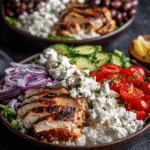
The visual presentation should showcase the beautiful colors—the golden-brown chicken with char marks, bright red tomatoes, green cucumbers, purple onions, dark olives, and white feta. This colorful arrangement makes your Mediterranean chicken bowls Instagram-worthy and appetite-stimulating.
Nutritional Benefits of Greek Chicken Bowls
These Greek chicken bowls aren’t just delicious—they’re nutritional powerhouses. Per bowl (based on 4 servings):
Calories: 620
Protein: 48g
Total Fat: 28g
Saturated Fat: 8g
Carbohydrates: 48g
Fiber: 6g
Sugar: 8g
Sodium: 980mg
The protein-rich chicken combined with fiber from vegetables and whole grains creates a satisfying, blood-sugar-stabilizing meal. The olive oil provides healthy monounsaturated fats that support heart health. Feta cheese adds calcium and additional protein. The abundance of vegetables contributes vitamins, minerals, and antioxidants.
This nutrient profile aligns perfectly with the Mediterranean diet, which has been extensively studied and associated with reduced risks of heart disease, diabetes, and cognitive decline. When you enjoy these Greek chicken bowls, you’re not just treating your taste buds—you’re nourishing your body in one of the healthiest ways possible.