Description
This easy high-protein Philly cheesesteak mac recipe takes the best elements of two iconic dishes and combines them into one protein-packed, incredibly satisfying meal. The high protein content (over 40 grams per serving!) comes from the lean beef and the protein-enhanced pasta, making this not just comfort food but functional food that keeps you full and energized.
Unlike traditional mac and cheese that can feel heavy and one-note, this version has layers of flavor and texture. The beef is seasoned perfectly, the peppers and onions add sweetness and crunch, and the cheese sauce is rich without being overwhelming. It’s the kind of dish that makes you close your eyes and smile with that first bite.
Ingredients
Ingredients for High-Protein Philly Cheesesteak Mac
For the Beef and Vegetables:
- 1.5 pounds lean ground beef (90/10 or 93/7) or thinly sliced ribeye steak
- 1 large onion, thinly sliced
- 2 bell peppers (red and green), thinly sliced
- 3 tablespoons olive oil (divided)
- 4 cloves garlic, minced
- 1 teaspoon Worcestershire sauce
- 1 teaspoon salt
- ½ teaspoon black pepper
- ½ teaspoon smoked paprika
For the Mac and Cheese:
- 1 pound high-protein pasta (such as Barilla Protein+ or chickpea pasta)
- Salt for pasta water
For the Cheese Sauce:
- 3 tablespoons butter
- 3 tablespoons all-purpose flour
- 2 cups whole milk
- 1 cup heavy cream
- 2 cups shredded provolone cheese
- 1 cup shredded sharp cheddar cheese
- ½ cup cream cheese, softened
- 1 teaspoon Dijon mustard
- ½ teaspoon salt
- ¼ teaspoon black pepper
- ¼ teaspoon cayenne pepper (optional)
For Topping and Garnish:
- ½ cup shredded mozzarella cheese
- Fresh parsley, chopped
- Red pepper flakes (optional)
- Extra bell peppers for garnish
Instructions
Detailed Step-by-Step Instructions
Cooking the Perfect Philly Cheesesteak Beef
The foundation of any great philly cheesesteak mac is perfectly cooked, well-seasoned beef. If you’re using ribeye steak (the traditional Philly choice), slice it as thinly as possible—I often partially freeze mine for about 30 minutes to make slicing easier. If using ground beef (my weeknight shortcut), choose a lean ratio to keep it from being greasy.
Heat 2 tablespoons of olive oil in a large, deep skillet or Dutch oven over medium-high heat. Add the beef and season immediately with salt, black pepper, and smoked paprika. If using sliced steak, cook without stirring for about 2 minutes to get a nice sear, then toss and cook another 2-3 minutes until just cooked through. For ground beef, break it apart with a wooden spoon and cook for 5-7 minutes until browned and no pink remains.
Add the Worcestershire sauce and minced garlic to the meat in the last minute of cooking. The Worcestershire adds that savory, umami depth that’s essential to authentic Philly flavor. Transfer the cooked beef to a plate and set aside.
Sautéing the Peppers and Onions
In the same skillet (don’t clean it—those browned bits add flavor!), add the remaining tablespoon of olive oil. Add the sliced onions and cook for about 4-5 minutes, stirring occasionally, until they start to soften and turn translucent. The onions should be getting sweet and fragrant.
Add the sliced bell peppers and continue cooking for another 5-7 minutes. You want the vegetables tender but still with a slight bite—they shouldn’t be mushy. The peppers should be vibrant in color with some charred edges. Season with a pinch of salt and pepper.
I always use a combination of red and green bell peppers for the classic Philly look and flavor, but you can use whatever peppers you prefer. Yellow or orange peppers add extra sweetness, while poblano peppers bring a mild heat.
Once the vegetables are cooked to your liking, transfer them to the plate with the beef.
Cooking the High-Protein Pasta
Bring a large pot of salted water to a boil. The protein pasta we’re using is heartier than regular pasta, so it needs well-salted water to season it properly. Add the pasta and cook according to package directions until al dente—usually about 7-9 minutes for protein pasta.
High-protein pasta tends to be slightly firmer and nuttier than regular pasta, which actually works beautifully in this dish. It holds its shape better when mixed with the heavy cheese sauce and won’t get mushy.
Before draining, reserve 1 cup of pasta cooking water. This starchy liquid is essential for adjusting the sauce consistency later. Drain the pasta and set aside.
Creating the Ultimate Cheese Sauce
This is where the magic happens. The cheese sauce for this philly cheesesteak mac needs to be rich, creamy, and able to stand up to the bold flavors of the beef and vegetables.
In your now-empty skillet (or a large saucepan), melt the butter over medium heat. When it’s fully melted and foamy, sprinkle in the flour and whisk constantly for about 2 minutes. You’re making a roux, which will thicken your sauce. It should smell nutty and toasty but shouldn’t brown.
Slowly pour in the milk and cream, whisking constantly to prevent lumps. Continue whisking as the mixture comes to a gentle simmer. It will start thin but will thicken as it heats. This takes about 5-7 minutes. Be patient and keep whisking.
When the mixture has thickened enough to coat the back of a spoon, reduce the heat to low. Add the cream cheese in small pieces, stirring until completely melted and incorporated. Then add the shredded provolone and cheddar cheese one handful at a time, stirring after each addition until melted before adding more.
Stir in the Dijon mustard (it adds tang and helps emulsify the sauce), salt, pepper, and cayenne if using. Taste and adjust seasonings. If the sauce seems too thick, thin it with a splash of the reserved pasta water.
Combining Everything
Add the cooked pasta to the cheese sauce and toss to coat every piece. Then add back the cooked beef and most of the sautéed peppers and onions (reserve some for topping). Fold everything together gently but thoroughly. The sauce should cling to the pasta, and every forkful should have beef, peppers, onions, and pasta.
If you’re serving immediately, transfer to serving dishes, top with the reserved peppers and onions, sprinkle with mozzarella cheese, and place under the broiler for 2-3 minutes until the cheese is bubbly and golden.
For a make-ahead version, transfer everything to a greased 9×13-inch baking dish, top with mozzarella and the reserved vegetables, cover with foil, and refrigerate. When ready to serve, bake at 350°F for 25-30 minutes, then uncover and broil for 2-3 minutes.
Describing the Visual Appeal
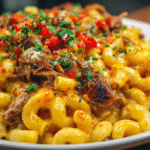
This high-protein Philly cheesesteak mac is a showstopper on the plate. The elbow pasta is completely enrobed in creamy, golden cheese sauce that glistens under the light. Tender shreds of beef are distributed throughout, along with colorful strips of red bell peppers and caramelized onions that add pops of color against the rich yellow-orange sauce. The top is crowned with melted mozzarella cheese that’s golden in spots and stretchy when you scoop into it. Fresh parsley flecks add bright green accents, and a sprinkle of red pepper flakes provides visual heat. Served in a bowl or on a plate, the creamy sauce pools slightly at the bottom, looking absolutely irresistible and inviting.
Nutritional Breakdown
This easy high-protein Philly cheesesteak mac delivers impressive nutrition while still being indulgent comfort food. Each generous serving (approximately 2 cups) provides:
Calories: 680-720
Protein: 48g
Carbohydrates: 52g
Fat: 32g
Fiber: 5g
Sugar: 6g
Sodium: 890mg
Calcium: 45% DV
Iron: 25% DV
The high protein content comes primarily from the lean beef and protein-enhanced pasta, making this an excellent post-workout meal or a satisfying dinner that keeps you full for hours. The combination of provolone, cheddar, and mozzarella cheeses provides calcium and additional protein.
While this is definitely an indulgent dish, the protein-to-calorie ratio is excellent compared to traditional mac and cheese. The bell peppers add vitamin C, vitamin A, and antioxidants. For an even lighter version, you can use ground turkey or chicken, reduce the amount of cheese slightly, and use half-and-half instead of heavy cream.
Presentation and Serving Suggestions
The presentation of this philly cheesesteak mac can range from casual weeknight to company-worthy:
Casual Family Style: Serve directly from the skillet or transfer to a large serving bowl. Let everyone help themselves, passing around extra toppings like hot sauce, additional cheese, or crushed red pepper.
Individual Servings: Portion into individual ramekins or oven-safe bowls, top each with cheese, and broil until bubbly. This presentation is perfect for dinner parties or when you want to control portions.
Elegant Plating: Use a large serving spoon or pasta fork to twirl the mac onto plates. Top with a neat pile of the peppers and onions in the center. Garnish with fresh parsley and a light dusting of smoked paprika. Serve with a small side salad for a complete, restaurant-quality presentation.
Complementary Sides and Pairings
While this philly cheesesteak mac is substantial enough to serve as a complete meal, certain accompaniments enhance the experience:
Salads: A crisp green salad with a tangy vinaigrette cuts through the richness beautifully. Try arugula with lemon dressing, or a classic house salad with Italian dressing.
Bread: Garlic bread or a warm baguette is perfect for those who can’t get enough carbs (no judgment here!). Cornbread also makes a surprisingly good pairing.
Pickled Vegetables: Pickled jalapeños, banana peppers, or giardiniera add a bright, acidic contrast that cleanses the palate between bites.
Beverages: Beer is a natural choice—try a lager, pilsner, or amber ale. For wine, go with a medium-bodied red like Merlot or Zinfandel. Non-alcoholic options include iced tea, cola, or sparkling water with lime.
Creative Variations and Modifications
This philly cheesesteak mac recipe is incredibly versatile. Here are some variations I’ve tried:
Chicken Philly Mac: Substitute thinly sliced chicken breast for the beef. Season with Italian herbs for a different flavor profile.
Mushroom Lover’s Version: Add sautéed mushrooms along with the peppers and onions. Cremini or portobello mushrooms work especially well.
Spicy Philly Mac: Add sliced jalapeños, use pepper jack cheese in place of some of the provolone, and increase the cayenne in the sauce.
Pizza Philly Mac: Add marinara sauce to the cheese sauce, use mozzarella exclusively, and top with pepperoni slices.
Lighter Version: Use ground turkey, reduce cheese by one-third, use milk instead of cream, and add extra vegetables like zucchini or spinach.
Gluten-Free: Use gluten-free high-protein pasta and substitute cornstarch for flour in the roux (use 2 tablespoons cornstarch mixed with 2 tablespoons cold water).
Frequently Asked Questions About Philly Cheesesteak Mac
Can I make this ahead for meal prep? Yes! This dish actually improves after a day in the refrigerator as the flavors meld. Store in an airtight container for up to 4 days. Reheat gently on the stovetop with a splash of milk, or in the microwave in 30-second intervals, stirring between each.
Can I freeze Philly cheesesteak mac? You can freeze it for up to 2 months, though the texture of the sauce may change slightly upon thawing. I recommend freezing it before the final broiling step. Thaw overnight in the refrigerator, then bake covered at 350°F until heated through.
What’s the best cheese for authentic Philly flavor? Provolone is traditional and provides that slightly sharp, tangy flavor. However, many Philly natives also love Cheez Whiz (yes, really!). For this mac version, I use a combination of provolone and sharp cheddar for depth of flavor.
How do I prevent the sauce from getting grainy? The key is to keep the heat low once you add the cheese, and add the cheese gradually. High heat can cause the proteins in cheese to seize up and separate. If your sauce does become grainy, whisk in a tablespoon of cold cream off the heat to bring it back together.
Can I use regular pasta instead of high-protein pasta? Absolutely! Use any short pasta shape you like—elbow macaroni, shells, or penne all work great. The protein count will be lower, but the dish will still be delicious.